Picture overload hinders children learning new words in storybooks, study finds
While publishers look to produce ever more colourful and exciting texts to entice buyers, University of Sussex psychologists have shown that having more than one illustration per page results in poorer word learning among pre-schoolers.
The findings, published in Infant and Child Development, present a simple solution to parents and nursery teachers for some of the challenges of pre-school education and could help in the development of learning materials for young children.
Doctoral researcher and co-author Zoe Flack said: “Luckily, children like hearing stories, and adults like reading them to children. But children who are too young to read themselves don’t know where to look because they are not following the text. This has a dramatic impact on how well they learn new words from stories.”
The researchers read storybooks to three-year-olds with one illustration at a time (the right-hand page was illustrated, the left-hand page was blank) or with two illustrations at a time (both pages had illustrations), with illustrations introducing the child to new objects that were named on the page.
They found that children who were read stories with only one illustration at a time learned twice as many words as children who were read stories with two or more illustrations.
In a follow-up experiment, researchers added a simple hand swipe gesture to guide the children to look at the correct illustration before the page was read to them. They found this gesture was effective in helping children to learn words when they saw two illustrations across the page.
Zoe, who has written a blog post about the research, said: “This suggests that simply guiding children’s attention to the correct page helps them focus on the right illustrations, and this in turn might help them concentrate on the new words.
“Our findings fit well with Cognitive Load Theory, which suggests that learning rates are affected by how complicated a task is. In this case, by giving children less information at once, or guiding them to the correct information, we can help children learn more words.”
Co-author Dr Jessica Horst said: “Other studies have shown that adding ‘bells and whistles’ to storybooks like flaps to lift and anthropomorphic animals decreases learning. But this is the first study to examine how decreasing the number of illustrations increases children’s word learning from storybooks.”
She added: “This study also has important implications for the e-Book industry. Studies on the usefulness of teaching vocabulary from e-Books are mixed, but our study suggests one explanation is that many studies with e-Books are presenting only one illustration at a time.”
The study is one of many being carried out at Sussex in The WORD Lab, a research group that focuses on how children learn and acquire language. Previous research has shown children learn more words from hearing the same stories repeated and from hearing stories at nap time.
The authors will be discussing this study and related findings at a British Science Festival event on Saturday 9 September 2017 at Brighton’s Jubilee Library.
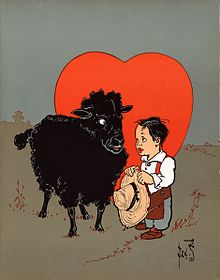
Image: Wikimedia Commons
Support Our Journalism
We cannot do without you.. your contribution supports unbiased journalism
IBNS is not driven by any ism- not wokeism, not racism, not skewed secularism, not hyper right-wing or left liberal ideals, nor by any hardline religious beliefs or hyper nationalism. We want to serve you good old objective news, as they are. We do not judge or preach. We let people decide for themselves. We only try to present factual and well-sourced news.
Support objective journalism for a small contribution.