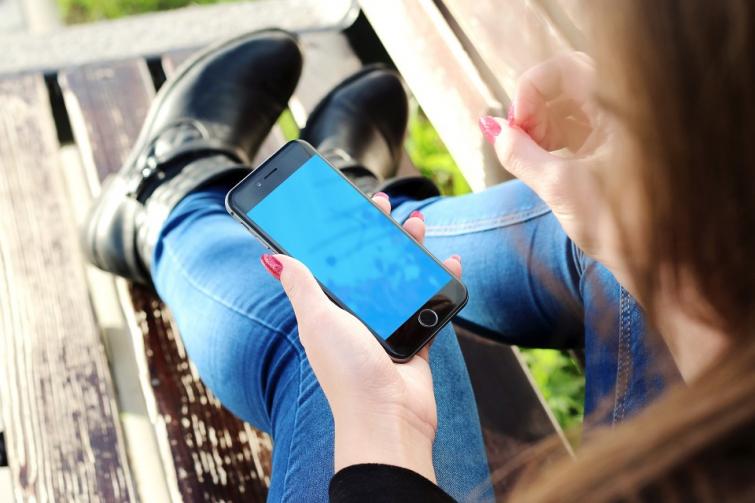
An estimated 1 in 4 children and young people have problematic smartphone usage: Study
London/IBNS: A study by researchers at King’s College London has estimated that one in four children and young people use their smartphones in a way that is consistent with a behavioural addiction. The research was published today in BMC Psychiatry.
By analysing literature that has been published since 2011 when smartphones first became widespread, the range of studies showed that 10-30% of children and young people used their smartphones in a dysfunctional way, which means an average of 23% were showing problematic smartphone usage (PSU).
PSU was defined as any behaviour linked to smartphones that has the features of an addiction, such as feeling panicky or upset when the phone is unavailable, finding it difficult to control the amount of time spent on the phone and using the phone to the detriment of other enjoyable activities.
The study is the first to investigate the prevalence of PSU in children and young people at this scale, summarising findings from 41 studies that have researched a total of 41,871 teenagers and young people. The 41 studies included 30 from Asia, nine from Europe and two America. 55% of the participants were female, and young women in the 17 to 19-year-old age group were most likely to have PSU.
The researchers also investigated the links of this type of smartphone usage and mental health and found a consistent association between PSU and poor measures of mental health in terms of depressed mood, anxiety, stress, poor sleep quality and educational attainment.
"Behavioural addictions can have serious consequences on mental health and day-to-day functioning, so there is a need for further investigation into problematic smartphone usage in the UK. In order to determine whether PSU should be classified as a behavioural addiction we need longitudinal data looking at PSU in relation to more objective health outcomes, as well as evidence that people with PSU struggle to moderate their use," First author Samantha Sohn from the Institute of Psychiatry, Psychology & Neuroscience at King’s.
"There is currently a lot of public discourse around the possible negative effects of smartphone use, and previous research has tended to only examine the quantity and frequency of time spent on any technology or screen. Our review assesses the effects not just of heavy use, but of dysfunctional smartphone use, and by looking at an 'addicted' pattern of behaviour towards smartphones we have established correlations between this type of dysfunctional behaviour and poorer mental health outcomes," Co-senior author Dr Ben Carter from the Institute of Psychiatry, Psychology & Neuroscience at King’s.
Over the past decade there has been an increase in smartphone use among children and young people and this has occurred at the same time as a rise in common mental disorders in the same age group. To help clarify the possible association between smartphone use and mental health in children and young people the researchers investigated patterns of smartphone-related behaviour, rather than smartphone use per se.
Support Our Journalism
We cannot do without you.. your contribution supports unbiased journalism
IBNS is not driven by any ism- not wokeism, not racism, not skewed secularism, not hyper right-wing or left liberal ideals, nor by any hardline religious beliefs or hyper nationalism. We want to serve you good old objective news, as they are. We do not judge or preach. We let people decide for themselves. We only try to present factual and well-sourced news.
Support objective journalism for a small contribution.