


 WHO
WHO
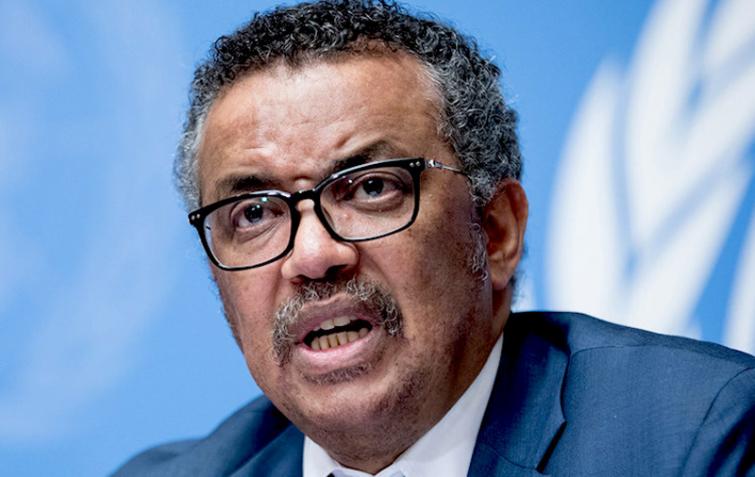
WHO's Tedros refutes new Japanese Coronavirus mutation more aggressive
Moscow/Sputnik: There is no evidence to suggest that the newly-detected Japanese mutation made the coronavirus more aggressive, World Health Organization (WHO) Director-General Tedros Adhanom Ghebreyesus said on Monday.
On Sunday, Japan’s National Institute of Infectious Diseases reported detecting a new variant of the coronavirus in four people who arrived from Brazil.
"Over the weekend, the WHO was notified by Japan about a new variant of the virus. The more the virus spreads, the higher the chance of new changes to the virus," Tedros said at a daily briefing, adding that "at present, the variants do not seem to show increased severity of disease."
The WHO chief urged everyone to continue observing personal protective measures, such as avoiding close contact with other people and wearing masks, adding that "limiting transmission limits the chance of dangerous new variants to develop."
The Japanese mutation is believed to be similar to those detected in the United Kingdom and South Africa in late December. UK health authorities said their strain was estimated up to 70 percent more contagious than the original coronavirus. There is yet no data to suggest that either of these variants is more deadly or causes stronger symptoms.
Support Our Journalism
We cannot do without you.. your contribution supports unbiased journalism
IBNS is not driven by any ism- not wokeism, not racism, not skewed secularism, not hyper right-wing or left liberal ideals, nor by any hardline religious beliefs or hyper nationalism. We want to serve you good old objective news, as they are. We do not judge or preach. We let people decide for themselves. We only try to present factual and well-sourced news.
Support objective journalism for a small contribution.


