 USA
USA
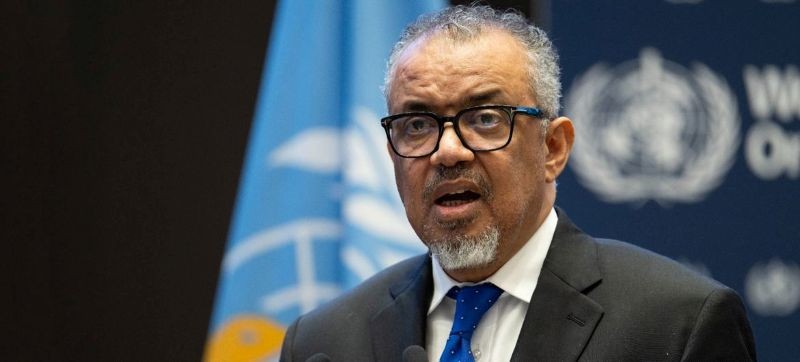
WHO chief Tedros Adhanom Ghebreyesus alerts US funding cuts threaten global health response
The World Health Organization (WHO) has warned over the impact of US funding cuts on critical global health initiatives, warning they pose a direct threat to public health efforts worldwide.
In a media briefing on Wednesday, WHO Director-General Tedros Adhanom Ghebreyesus highlighted the consequences of funding suspensions, including disruptions to HIV treatment, setbacks in polio eradication and limited resources for responding to mpox epidemics in Africa.
“The suspension of funding to PEPFAR, the President’s Emergency Plan for AIDS Relief, caused an immediate stop to HIV treatment, testing and prevention services in the 50 countries,” Tedros said.
He noted that despite a waiver for life-saving services, prevention programmes for at-risk groups remain excluded, clinics have closed, and health workers have been put on leave.
Tedros urged the US Government to reconsider its funding approach, at least until alternative solutions can be found to maintain essential health services.
Ebola outbreak in Uganda
Turning to Uganda, Tedros provided updates on the recently reported Ebola outbreak, with nine confirmed cases, including one death.
WHO has deployed emergency teams to support surveillance, treatment and infection control measures.
A vaccine trial, launched just four days after the outbreak was declared, is now underway, while approval for a therapeutics trial is pending.
To sustain the response, WHO has allocated an additional $2 million from its Contingency Fund for Emergencies, supplementing the $1 million already provided.
Conflict in DR Congo
The humanitarian crisis in the Democratic Republic of the Congo is also straining health services, with more than 900 deaths and over 4,000 injuries reported amid escalating violence in the east.
WHO Africa Health workers wearing protective clothing in Uganda.
“At most, only one-third of people who need health services in North and South Kivu are able to receive them,” Tedros stated, emphasising the risks posed by infectious disease outbreaks such as mpox and cholera.
Supplies, including medicines and fuel, are running critically low, further complicating WHO’s ability to respond.
Advancing childhood cancer treatment
On a more positive note and as UN News reported on Tuesday, WHO announced progress in expanding access to childhood cancer medicines in low and middle-income countries.
“Yesterday, we began distributing childhood cancer medicines at no cost in the first two countries: Mongolia and Uzbekistan,” said Tedros, adding that shipments are planned for four more countries.
The programme is facilitated through the Global Initiative on Childhood Cancer, launched in partnership with St. Jude Children’s Research Hospital.
The initiative aims to reach 120,000 children across 50 countries over the next five to seven years, addressing stark disparities in survival rates between high-income and low-income nations.
Support Our Journalism
We cannot do without you.. your contribution supports unbiased journalism
IBNS is not driven by any ism- not wokeism, not racism, not skewed secularism, not hyper right-wing or left liberal ideals, nor by any hardline religious beliefs or hyper nationalism. We want to serve you good old objective news, as they are. We do not judge or preach. We let people decide for themselves. We only try to present factual and well-sourced news.
Support objective journalism for a small contribution.