


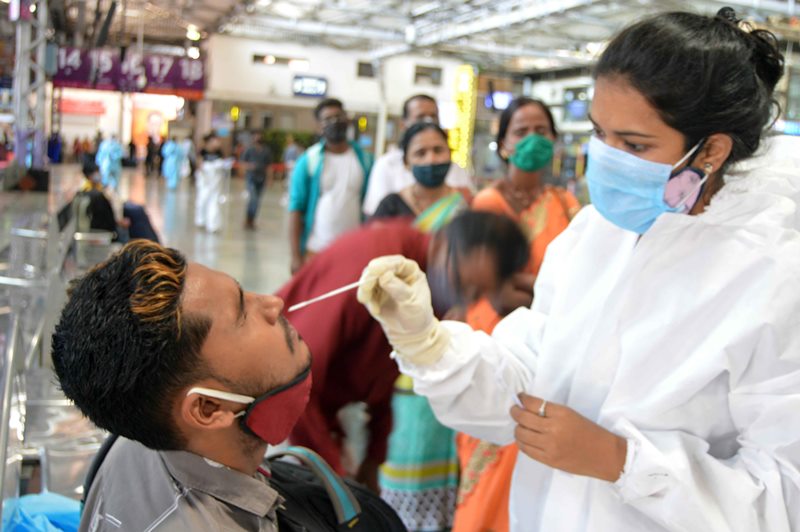
 India-Covid19
Vaccines' effectiveness on Indian variant of Covid remains uncertain: WHO
New Delhi/IBNS: The World Health Organization (WHO) has expressed uncertainty about the effectiveness of vaccines on the Indian variant of coronavirus, which it had already claimed to be deadlier and more infectious.
WHO said the potential impact of these mutations on the effectiveness of vaccines remains uncertain.
The B.1.617 variant first detected in India in October and now found in 44 countries, has a higher rate of transmission and reduced susceptibility to neutralisation antibodies.
According to WHO, the B.1.17 variant found in the UK and the India-dominant B.1.617 have "begin to wane in recent weeks".
The UN health body expressed concern stating there are more dangerous mutations of the B.1.617 now - the B.1.617.1 and B.1.617.2.
"Preliminary analyses show B.1.617.1 and B1.617.2 have substantially higher growth rate suggesting potentially higher transmissibility," WHO said in an update.
"B.1.617 sub-lineages appear to have higher rates of transmission, including observed rapid increases in prevalence in multiple countries (moderate evidence available for B.1.617.1 and B.1.617.2)."
The global health body said the potential impact of the B.1.617 variants on the effectiveness of vaccines, medicines and on the chances of reinfection remains uncertain.
"Preliminary laboratory studies awaiting peer review suggest a limited reduction in neutralisation by antibodies; however, real-world impacts may be limited," it said.
Some studies have shown the Pfizer and Moderna vaccines have shown "reduced effectiveness" against variants in India, says WHO.
"Preliminary evidence suggests potential reduced effectiveness of Bamlanivimab, a monoclonal antibody used for COVID-19 treatment, and potentially slightly reduced susceptibility to neutralisation antibodies," says the WHO paper.
An American expert, meanwhile, suggested that the Pfizer, Moderna and Johnson and Johnson vaccines are effective against the B.1.617 variant.
Support Our Journalism
We cannot do without you.. your contribution supports unbiased journalism
IBNS is not driven by any ism- not wokeism, not racism, not skewed secularism, not hyper right-wing or left liberal ideals, nor by any hardline religious beliefs or hyper nationalism. We want to serve you good old objective news, as they are. We do not judge or preach. We let people decide for themselves. We only try to present factual and well-sourced news.
Support objective journalism for a small contribution.


