


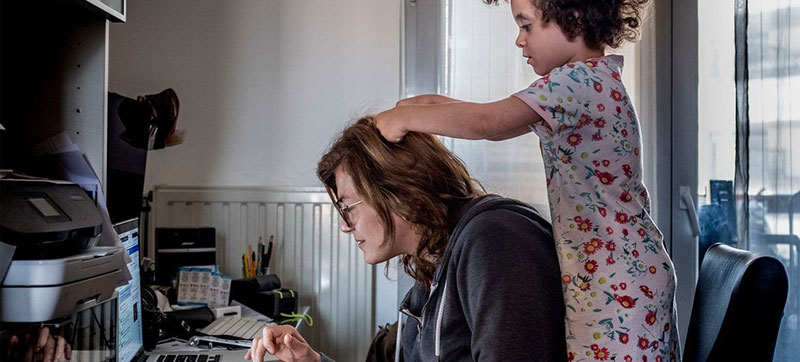
 Teleworking
Teleworking during COVID: Risks, benefits and steps to a ‘new normal’
New York: More than two years since COVID-19 began disrupting office life around the world, crucial changes are needed to safeguard health while teleworking, two UN agencies said on Wednesday.
In a new technical brief on healthy and safe teleworking launched on Wednesday, the World Health Organization (WHO) and the International Labour Organization (ILO) outline the health benefits and risks of remote work arrangements along with the measures needed to accommodate both the shift, and the ongoing digital transformation.
“The pandemic has led to a surge of teleworking, effectively changing the nature of work practically overnight for many workers”, said Maria Neira, WHO Director, Department of Environment, Climate Change and Health.
Upside
Among the benefits, the report says, are an improved work–life balance; opportunities for flexible working hours and more physical activity; reduced traffic and commuting time; and a decrease in air pollution across urban areas.
These can all improve physical and mental health, and social wellbeing.
Moreover, teleworking can also lead to higher productivity and lower operating costs for many companies.
Downside
However, the report warns that without proper planning, organization and health and safety support, teleworking can lead to feelings of isolation, burnout, depression, eye strain, increased alcohol consumption and unhealthy weight gain.
“Which way the pendulum swings, depends entirely on whether governments, employers and workers, work together, and whether there are agile and inventive occupational health services to put in place policies and practices that benefit both workers and the work”, said Dr. Neira.
Settling into a ‘new normal’
As both companies and employees alike have experienced the benefits of home and hybrid work, the Director of ILO’s Governance and Tripartism Department, Vera Paquete-Perdigão, said that they are “here to stay and will likely increase after the pandemic”.
“As we move away from this ‘holding pattern’ to settle into a new normal, we have the opportunity to embed new supportive policies, practices and norms to ensure millions of teleworkers have healthy, happy, productive and decent work”, she said.
Occupational health services should be providing provide ergonomic, mental health and psychosocial support to teleworkers using digital telehealth technologies, the report says.
For example, employers should put measures in place to ensure that personnel receive adequate work-related equipment; relevant information and training to reduce the psychosocial impact of teleworking; and establish the “right to disconnect”.
Meeting needs
The report outlines the roles of governments, employers, workers and health services at workplaces to promote and protect health and safety while teleworking.
It also offers practical recommendations for the organization of telework that meet the needs of both workers and businesses, such as developing individual work plans with clear priorities, timelines and expected results.
The agency advice calls on businesses to develop special programmes for teleworking that combine measures for managing work and performance, using effective digital platforms.
Support Our Journalism
We cannot do without you.. your contribution supports unbiased journalism
IBNS is not driven by any ism- not wokeism, not racism, not skewed secularism, not hyper right-wing or left liberal ideals, nor by any hardline religious beliefs or hyper nationalism. We want to serve you good old objective news, as they are. We do not judge or preach. We let people decide for themselves. We only try to present factual and well-sourced news.
Support objective journalism for a small contribution.


