


Study finds more losers than winners for Southern Ocean marine life
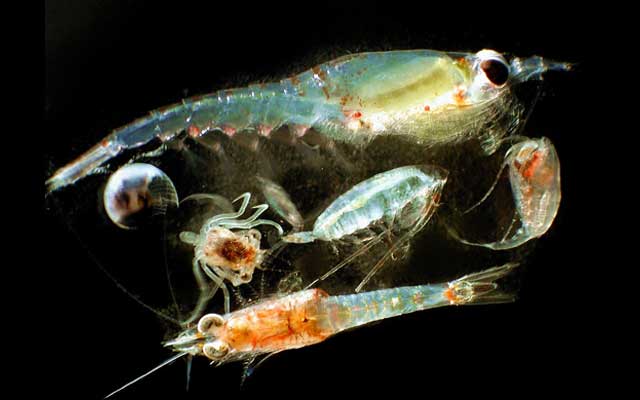
A team at British Antarctic Survey (BAS) examined the potential distribution of over 900 species of shelf-dwelling marine invertebrates under a warming scenario produced by computer models. They conclude that, while some species in some areas will benefit, 79% of the species native to the region will lose out. This has important implications for future resource management in the region.
An average warming of 0.4 of a degree is predicted by 2099, and whilst this warming will not be enough to allow any species from other neighbouring continents to invade or colonise Antarctica, it will cause the unique local species to change their distribution. More animals will lose suitable habitat than will gain it, with those animals especially adapted to the coldest water on Earth (for example in the Weddell and Ross Sea) losing out the most. Areas of the West Antarctic Peninsula may become too warm for many native species.
The seafloor animals of the Southern Ocean shelf have long been isolated by the deep ocean surrounding Antarctica and the Antarctic Circumpolar Current, with little scope for southward migration.
Lead author, Dr Huw Griffiths from BAS says:“While a few species might thrive at least during the early decades of warming, the future for a whole range of invertebrates from starfish to corals is bleak, and there’s nowhere to swim to, nowhere to hide when you’re sitting on the bottom of the world’s coldest and most southerly ocean and it’s getting warmer by the decade.”
Image:wikimedia commons
Support Our Journalism
We cannot do without you.. your contribution supports unbiased journalism
IBNS is not driven by any ism- not wokeism, not racism, not skewed secularism, not hyper right-wing or left liberal ideals, nor by any hardline religious beliefs or hyper nationalism. We want to serve you good old objective news, as they are. We do not judge or preach. We let people decide for themselves. We only try to present factual and well-sourced news.
Support objective journalism for a small contribution.


