


 COVID19
Storms, coronavirus pose ‘double threat’ for children in Central America and Caribbean – UNICEF
New York: Across Central America and the Caribbean, the more than 70 million children impacted by the COVID-19 pandemic could soon face another threat – catastrophic hurricane storms, the UN Children’s Fund (UNICEF) warned on Monday.
“In the coming days and weeks, children and families will be at risk of being hit simultaneously by two disasters, COVID-19 and hurricanes,” cautioned Bernt Aasen, UNICEF Regional Director for Latin America and the Caribbean.
Roadblocks ahead
While acknowledging that displacement, infrastructure damage and service interruptions caused by storms – particularly in coastal areas – could render individuals more vulnerable to the disease and its impacts, the UN children’s agency expressed special concern that a powerful storm could severely undermine ongoing efforts to stem COVID-19.
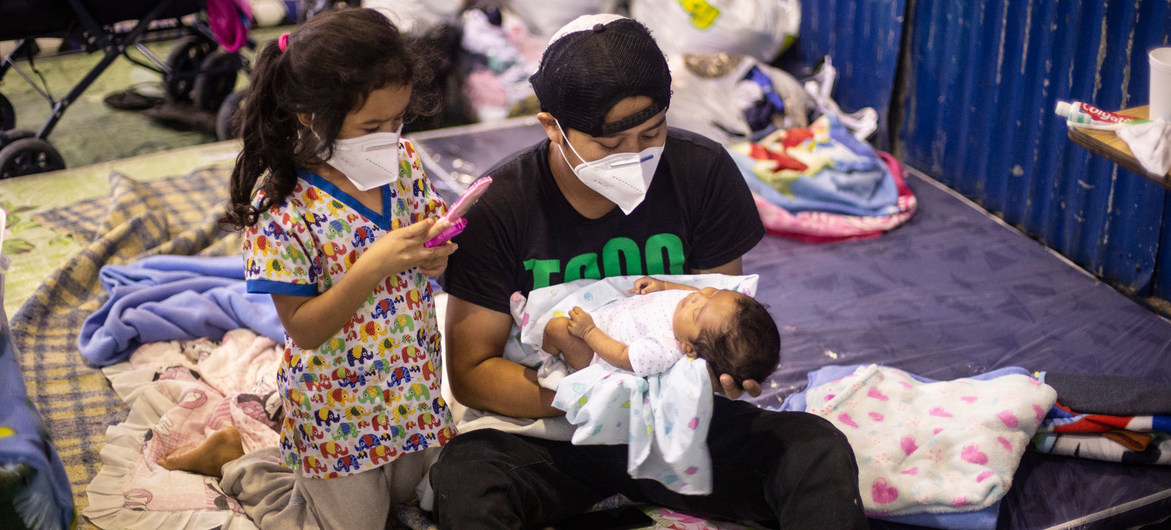
The coronavirus could spread easily in crowded emergency shelters or displacement sites where physical distancing would be difficult to ensure, according to UNICEF.
At the same time, existing control measures like handwashing could falter if water, sanitation and health infrastructure were to be damaged or destroyed.
“This is the perfect storm we fear for the Caribbean and Central America,” said the UNICEF official.
Hampered efforts
In addition to straining national and local health systems in the region, the pandemic is also raising serious questions about the aftermath of a catastrophic hurricane, including movement restrictions and budget shortfalls, which may hinder national hurricane preparedness efforts.
“As we continue to take precautions to keep families safe from COVID-19, efforts to prepare for hurricane now are vital to mitigate the spread of virus among the most vulnerable communities”, Mr. Aasen explained.
Danger on the horizon
As UNICEF reported in a recent Child Alert, over the coming years the Caribbean region is expected to experience intensified storms and subsequent population displacements.
In late May, tropical storm Amanda caused flooding and landslides in parts of El Salvador, Guatemala and Honduras. At least 33 people were killed in the region and thousands were displaced. All three countries have confirmed cases of COVID-19.
And in the 10-year period from 2010 to 2019, storms caused 895,000 new displacements of children in the Caribbean and 297,000 in Central America, according to the UN children’s agency.
Stepping up
Across the region, UNICEF is working to support hurricane preparedness efforts and public health responses to COVID-19 through education, community outreach and technical support.
In collaboration with Governments and other partners, the agency is working to build disaster resilience among communities in the region, including by adjusting hurricane preparedness and response plans to reflect COVID-19 risks with a focus on vulnerable groups, like children, pregnant women and single-headed female families.
Moreover, UNICEF is also working to improve coordination mechanisms and tools for timely needs assessments and response based on evidence and with Governments on climate change adaptation policies to ensure that they are child sensitive and informed by the long-term perspectives of youth and adolescents.
Support Our Journalism
We cannot do without you.. your contribution supports unbiased journalism
IBNS is not driven by any ism- not wokeism, not racism, not skewed secularism, not hyper right-wing or left liberal ideals, nor by any hardline religious beliefs or hyper nationalism. We want to serve you good old objective news, as they are. We do not judge or preach. We let people decide for themselves. We only try to present factual and well-sourced news.
Support objective journalism for a small contribution.


