


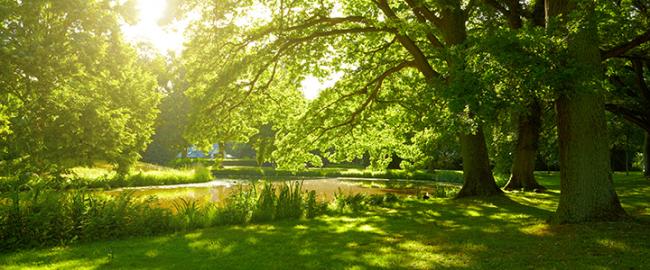
Spending time outside is good for health: Study
London, July 7 (IBNS): Living close to nature and spending time outside has significant and wide-ranging health benefits - according to new research from the University of East Anglia.
A new report published today reveals that exposure to greenspace reduces the risk of type II diabetes, cardiovascular disease, premature death, preterm birth, stress, and high blood pressure.
Populations with higher levels of greenspace exposure are also more likely to report good overall health – according to global data involving more than 290 million people.
Lead author Caoimhe Twohig-Bennett, from UEA’s Norwich Medical School, said: “Spending time in nature certainly makes us feel healthier, but until now the impact on our long-term wellbeing hasn’t been fully understood.
“We gathered evidence from over 140 studies involving more than 290 million people to see whether nature really does provide a health boost.”
The research team studied data from 20 countries including the UK, the US, Spain, France, Germany, Australia and Japan – where Shinrin yoku or ‘forest bathing’ is already a popular practice.
‘Green space’ was defined as open, undeveloped land with natural vegetation as well as urban greenspaces, which included urban parks and street greenery.
The team analysed how the health of people with little access to green spaces compared to that of people with the highest amounts of exposure.
“We found that spending time in, or living close to, natural green spaces is associated with diverse and significant health benefits. It reduces the risk of type II diabetes, cardiovascular disease, premature death, and preterm birth, and increases sleep duration.
“People living closer to nature also had reduced diastolic blood pressure, heart rate and stress. In fact, one of the really interesting things we found is that exposure to greenspace significantly reduces people’s levels of salivary cortisol – a physiological marker of stress.
“This is really important because in the UK, 11.7 million working days are lost annually due to stress, depression or anxiety.”
“Forest bathing is already really popular as a therapy in Japan – with participants spending time in the forest either sitting or lying down, or just walking around. Our study shows that perhaps they have the right idea!
“Although we have looked at a large body of research on the relationship between greenspace and health, we don’t know exactly what it is that causes this relationship.
“People living near greenspace likely have more opportunities for physical activity and socialising. Meanwhile, exposure to a diverse variety of bacteria present in natural areas may also have benefits for the immune system and reduce inflammation.
“Much of the research from Japan suggests that phytoncides – organic compounds with antibacterial properties – released by trees could explain the health-boosting properties of forest bathing.”
Study co-author Prof Andy Jones, also from UEA, said: “We often reach for medication when we’re unwell but exposure to health-promoting environments is increasingly recognised as both preventing and helping treat disease. Our study shows that the size of these benefits can be enough to have a meaningful clinical impact.”
The research team hope that their findings will prompt doctors and other healthcare professionals to recommend that patients spend more time in greenspace and natural areas.
Twohig-Bennett said: “We hope that this research will inspire people to get outside more and feel the health benefits for themselves. Hopefully our results will encourage policymakers and town planners to invest in the creation, regeneration, and maintenance of parks and greenspaces, particularly in urban residential areas and deprived communities that could benefit the most.”
‘The health benefits of the great outdoors: A systematic review and meta-analysis of greenspace exposure and health outcomes’ is published in the journal Environmental Research on 6 July.
Image: University of East Anglia website
Support Our Journalism
We cannot do without you.. your contribution supports unbiased journalism
IBNS is not driven by any ism- not wokeism, not racism, not skewed secularism, not hyper right-wing or left liberal ideals, nor by any hardline religious beliefs or hyper nationalism. We want to serve you good old objective news, as they are. We do not judge or preach. We let people decide for themselves. We only try to present factual and well-sourced news.
Support objective journalism for a small contribution.


