


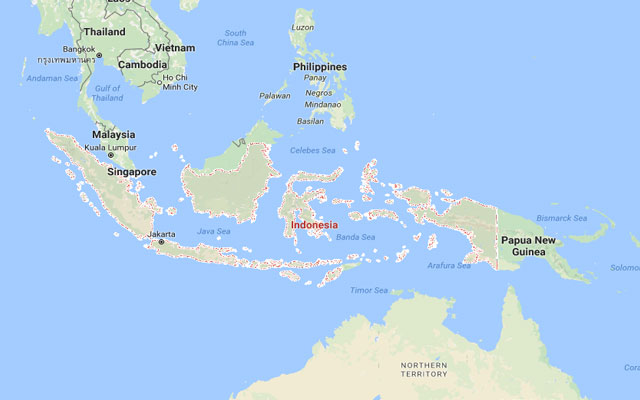
Project to support conservation of Indonesian river and forest habitats to protect wildlife
Sara Thornton, a PhD student from the University of Leicester Department of Geography, has been investigating tropical peat-swamp forests (TPSF) in Sabangau in Indonesia - tropical forests where waterlogged soils hinder the decomposition of organic materials such as fallen leaves and even whole trees.
TPSFs are important habitats for freshwater fish species, which are an important source of livelihood and protein for many of the communities living by the rivers and forests of Borneo.
TPSFs are also vital to our global climate balance, storing significant amounts of carbon in their soils.
However, they are under threat from logging, palm oil, drainage and fire, which threatens the ecosystem and puts the survival of many species of animal at risk.
Sara explained: “The degradation of TPSF habitats not only impacts the future survival of the endangered orangutan, but also the freshwater fish that are so important to local communities that depend on the forest and water habitats for their livelihoods.
“It is therefore essential to improve our understanding of these wetland habitats, their importance for community livelihoods and cultures, and ultimately find ways of promoting conservation alongside community development.”
As part of the project, Sara, working with local research assistants and facilitators, took an interdisciplinary approach in order to understand the socio-ecological system of Sabangau.
They conducted the first in-depth surveys of the fish and water in the Sabangau area, identifying 48 fish species, bringing the total species count to 54 species when including known fish in the area.
Their findings suggest that Sabangau is a notable area for peat-swamp forest fish diversity.
The researchers also conducted interviews and focus groups in two local communities: Kereng Bangkirai (situated near to the intact Sabangau peat-swamp forest) and Taruna Jaya (situated in an area of severely degraded peatland), exploring their perceptions of environmental change on their lives and livelihood.
Fish were considered in both locations to be the most important species of animal to people’s lives and the communities showed strong spiritual beliefs related to fish and the river in the Sabangau area.
Using collected data on water quality - which included pH, water temperature, water depths, dissolved oxygen levels, and nutrient levels - the researchers are now able to recommend improvements for future fish sampling in the area, and they now have a baseline to understand longer-term changes in the wetland ecosystem with future surveys.
Sara added: “While fish may not be the most charismatic of TPSF species like great-apes or felids, they provide one of the clearest faunal links between people, livelihoods and their environment.
“In areas with high dependence on fish for livelihoods, fish research and conservation projects could be a great opportunity to increase the relevance of environmental research to local communities and thereby potentially increasing local support for conservation projects.”
Professor Sue Page from the University of Leicester Department of Geography, who is one of Sara's PhD supervisors, has herself spent much time carrying out research in the peat swamp forests of Southeast Asia.
Professor Page commented: “Sara's photographs capture perfectly the feeling of enjoyment, relief and satisfaction on reaching the end of a long, hot, tiring but successful day of field work as well as highlight the importance of conservation projects such as these.”
The partners for the project were: the Borneo Nature Foundation (BNF) and the Centre for International Cooperation in Sustainable Management of Tropical Peatland (CIMTROP) based at the University of Palangka Raya.
Support Our Journalism
We cannot do without you.. your contribution supports unbiased journalism
IBNS is not driven by any ism- not wokeism, not racism, not skewed secularism, not hyper right-wing or left liberal ideals, nor by any hardline religious beliefs or hyper nationalism. We want to serve you good old objective news, as they are. We do not judge or preach. We let people decide for themselves. We only try to present factual and well-sourced news.
Support objective journalism for a small contribution.


