


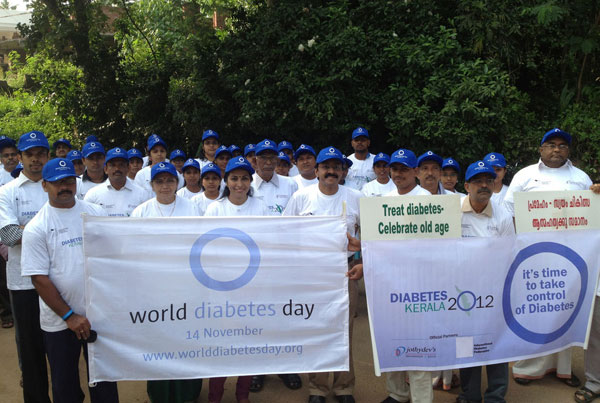
On World Diabetes Day, Ban underscores threat of non-communicable diseases
“Let us make World Diabetes Day meaningful by committing to practicing healthy living ourselves and making it possible for others to do the same,” Ban stated in his messagefor the Day, which is observed annually on 14 November.
Approximately 350 million people are currently living with diabetes, and the number is expected to double between 2005 and 2030, according to projections by the UN World Health Organization (WHO).
Diabetes – which occurs when the pancreas does not produce enough insulin, or when the body cannot effectively use the insulin it produces – has become one of the major causes of premature illness and death in most countries, mainly through the increased risk of cardiovascular disease.
Ban called on governments as well as the private sector and civil society to unite in producing and promoting more food products consistent with a healthy diet that are affordable, accessible and available to all.
“A holistic approach to human health and the environment can serve to preserve biodiversity, encourage alternative forms of transportation, and boost the transition to a low-carbon economy,” he stressed.
This year, World Diabetes Day focuses on healthy eating as an important component of both preventing and treating diabetes. Healthy eating and regular exercise can prevent the onset of type 2 diabetes and are important in managing all types of diabetes, the Secretary-General said.
Often misunderstood as a disease associated with affluent lifestyles, diabetes is a growing problem in developing countries. Recognizing that non-communicable diseases constitute one of the major challenges for development in the 21st century, the United Nations convened a high-level meeting on the issue in 2011, during which governments committed to developing national policies for diabetes prevention, treatment and care.
That commitment was reaffirmed two years later at the World Health Assembly, which set a target to stop the rise in obesity and diabetes by 2025. A second high-level UN meeting earlier this year recognized a marked increase in the number of countries with policies on non-communicable diseases.
“This is welcome progress but governments must step up their response, including by protecting people against risk factors such as unhealthy diet and physical inactivity,” the Secretary-General said.
“Fortunately, there are many cost-effective and feasible ways to address diabetes and other non-communicable diseases. By monitoring blood pressure, improving diet and engaging in exercise, people can significantly cut their risk and manage their symptoms,” he added.
Started by WHO and the International Diabetes Federation, the Day is celebrated on 14 November to mark the birthday of Frederick Banting who, along with Charles Best, was instrumental in the discovery of insulin in 1922, a life-saving treatment for diabetes patients.
Photo: International Diabetes Federation
Support Our Journalism
We cannot do without you.. your contribution supports unbiased journalism
IBNS is not driven by any ism- not wokeism, not racism, not skewed secularism, not hyper right-wing or left liberal ideals, nor by any hardline religious beliefs or hyper nationalism. We want to serve you good old objective news, as they are. We do not judge or preach. We let people decide for themselves. We only try to present factual and well-sourced news.
Support objective journalism for a small contribution.


