NASA releases spooky space sounds on Halloween
Washington, Oct 29 (IBNS): Soaring to the depths of our universe, gallant spacecraft roam the cosmos, snapping images of celestial wonders. Some spacecraft have instruments capable of capturing radio emissions. When scientists convert these to sound waves, the results are eerie to hear.
"In time for Halloween, we've put together a compilation of elusive "sounds" of howling planets and whistling helium that is sure to make your skin crawl," read the NASA website.
Juno Captures the 'Roar' of Jupiter: NASA's Juno spacecraft has crossed the boundary of Jupiter's immense magnetic field. Juno's Waves instrument recorded the encounter with the bow shock over the course of about two hours on June 24, 2016.
Plasma Waves: Plasma waves, like the roaring ocean surf, create a rhythmic cacophony that — with the EMFISIS instrument aboard NASA’s Van Allen Probes — we can hear across space.
Saturn's Radio Emissions: Saturn is a source of intense radio emissions, which were monitored by the Cassini spacecraft. The radio waves are closely related to the auroras near the poles of the planet. These auroras are similar to Earth's northern and southern lights. More of Saturn's eerie-sounding radio emissions.
Sounds of Jupiter: Scientists sometimes translate radio signals into sound to better understand the signals. This approach is called "data sonification". On June 27, 1996, the Galileo spacecraft made the first flyby of Jupiter's largest moon, Ganymede, and this audio track represents data from Galileo's Plasma Wave Experiment instrument.
Sounds of a Comet Encounter: During its Feb. 14, 2011, flyby of comet Tempel 1, an instrument on the protective shield on NASA's Stardust spacecraft was pelted by dust particles and small rocks, as can be heard in this audio track.
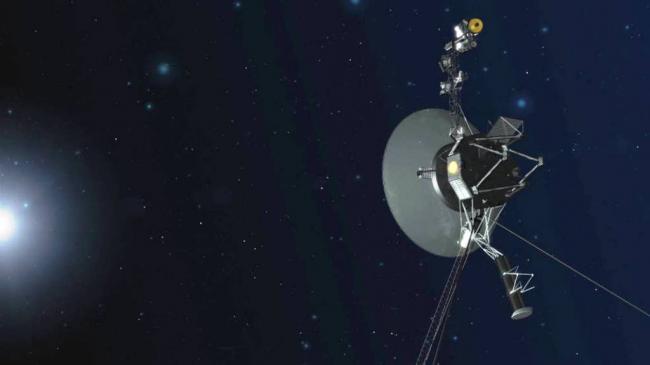
Image: NASA website
Support Our Journalism
We cannot do without you.. your contribution supports unbiased journalism
IBNS is not driven by any ism- not wokeism, not racism, not skewed secularism, not hyper right-wing or left liberal ideals, nor by any hardline religious beliefs or hyper nationalism. We want to serve you good old objective news, as they are. We do not judge or preach. We let people decide for themselves. We only try to present factual and well-sourced news.
Support objective journalism for a small contribution.