NASA identifies 9 potential landing sites on Moon for Artemis III Mission
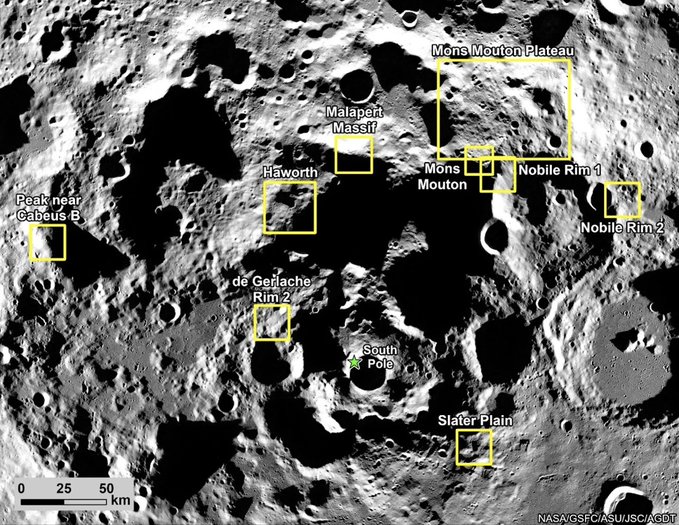
New Delhi/IBNS: Prepping up for the upcoming Artemis III mission, the National Aeronautics Space Agency (NASA) shortlisted nine potential landing sites near the lunar South Pole.
This is the American space agency's first crewed Moon landing in over 50 years.
These locations will undergo scientific and engineering assessments.
NASA plans to continue exploring other areas for future missions beyond this selection.
The nine proposed lunar landing regions situated near the South Pole are Peak near Cabeus B, Haworth, Malapert Massif, Mons Mouton Plateau, Mons Mouton, Nobile Rim 1, Nobile Rim 2
de, Gerlache Rim 2, Slater Plain.
Our #Artemis III astronauts will land on the Moon for the first time in over 50 years. Where on the Moon are they landing?
— NASA (@NASA) October 28, 2024
We are refining a list of nine areas near the lunar South Pole, a place we’ve never set foot on before: https://t.co/v2rmELgPW9 pic.twitter.com/FIygdytbJy
According to NASA, each of these nine locations offers the chance to gain vital information about rocky planets, lunar resources, and the broader history of the solar system.
Unexplored by crewed missions, the lunar south pole has permanently dark regions that may contain essential resources like water.
Lakiesha Hawkins, assistant deputy associate administrator, Moon to Mars Program Office, NASA, said, “Artemis will return humanity to the Moon and visit unexplored areas. NASA's selection of these regions shows our commitment to landing crew safely near the lunar South Pole, where they will help uncover new scientific discoveries and learn to live on the lunar surface.”
Support Our Journalism
We cannot do without you.. your contribution supports unbiased journalism
IBNS is not driven by any ism- not wokeism, not racism, not skewed secularism, not hyper right-wing or left liberal ideals, nor by any hardline religious beliefs or hyper nationalism. We want to serve you good old objective news, as they are. We do not judge or preach. We let people decide for themselves. We only try to present factual and well-sourced news.
Support objective journalism for a small contribution.