September 19, 2026 01:27 am (IST)

Follow us:


IG Wildlife explains departmental stance on human-wildlife conflict
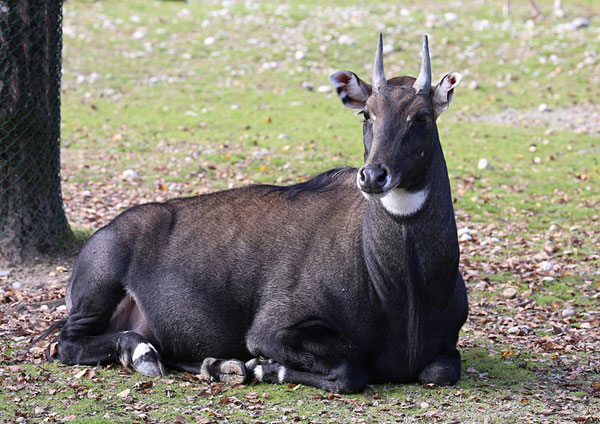
New Delhi, June 10 (IBNS): In the wake of the controversy that erupted from the killing of almost 200 nilgai or blue bulls in Bihar, Inspector General Wildlife, Ministry of Environment, Forest and Climate Change, Dr. S. K Khanduri, issued a formal statement on human-wildlife conflicts, on Thursday.
The text of the statement was:
“India is proud of its animal-human coexistence. In some places, animal- human conflicts happen. Last year, more than 500 people lost their lives in human-wildlife conflicts. There are standard operating processes laid down in the Wildlife (Protection) Act 1972. Therefore, the Ministry has not given any permission to kill either Deer, Peacock or Elephant.
There are many complaints from Members of Parliament, People’s Representatives, State Governments and Farmers about their crops getting heavily damaged in certain parts of the country. There also, the process has been laid down in the Wildlife (Protection) Act 1972 under section 62. No amendment has been made by the Government to this Act. And nothing has been done beyond the procedure prescribed by law.
As per the provision of law, if there are complaints about the wildlife conflict, then State Government has to submit the proposal. Till date, five states have submitted the proposal. The Ministry examines the proposal in detail and allows scientific management in a specific area for a limited time. There were complaints about wild boar, Blue bull and other animals.
Accordingly, these proposals have been examined and given permission for scientific management for a limited time for a specific area in the three states of Uttarakhand, Bihar and Himachal Pradesh. Proposals of Maharashtra and Gujarat are still being examined.”
On Thursday, Union Environment Minister Prakash Javadekar and Union Women and Child Welfare Minister Maneka Gandhi were locked in debate over the culling of nilgais.
Maneka Gandhi blamed the Javadekar-led ministry of giving permission to kill the endangered animals, calling the culling a "massacre" in a televised comment reported by NDTV.
Prakash Javadekar has countered Maneka Gandhi's allegations by saying that his department gives permission if states ask for it to prevent animals from destroying crops, media reported. Javadekar called is a "scientific management" while talking to NDTV.
The blue bull is said to be the largest Asian antelope and endemic to the Indian subcontinent.
Support Our Journalism
We cannot do without you.. your contribution supports unbiased journalism
IBNS is not driven by any ism- not wokeism, not racism, not skewed secularism, not hyper right-wing or left liberal ideals, nor by any hardline religious beliefs or hyper nationalism. We want to serve you good old objective news, as they are. We do not judge or preach. We let people decide for themselves. We only try to present factual and well-sourced news.
Support objective journalism for a small contribution.

Latest Headlines
Disappearing Nilgiri grasslands impact bird populations
Mon, Aug 24 2026
Boat operator fined Rs 5 Lakh for waking sleeping polar bear with foghorn in Norway
Sun, Aug 16 2026
US: Terrifying moment at Yellowstone National Park when giant bison charges SUV, leaves tyre shredded
Mon, Jul 27 2026
A Wild Success? Tracking a Decade of Rhino Reintroduction in Manas
Tue, May 12 2026
Climate change crisis: Dangerous snakes expanding into new regions as global temperatures rise
Fri, Apr 03 2026