


If current trends hold, childhood obesity will hit 70 million by 2025, warns UN health agency
“Childhood obesity can erode the benefits that arrive with social and economic progress,” WHO Director General Dr. Margaret Chan told the Commission on Ending Childhood Obesity, which is meeting in Hong Kong. “Childhood obesity must be accepted as a significant and urgent threat to health that is relevant in all countries. Governments must take the lead.”
Dr. Chan praised the interim report on the work carried out thus far by the Commission and commended the group’s warning that “voluntary initiatives are not likely to be sufficient.”
“To be successful, efforts aimed at reducing the marketing of unhealthy foods and beverages need support from regulatory and statutory approaches,” she said.
She also noted that “perhaps most importantly, you defined a moral responsibility and stated where it must lie. None of the factors that cause obesity are under the control of the child.”
According to WHO, the number of overweight or obese infants and young children increased from 32 million globally in 1990 to 42 million in 2013. In Africa alone, the number of overweight or obese children increased from 4 to 9 million over the same period.
The WHO fact sheet on childhood obesity also said that the vast majority of overweight or obese children live in developing countries, and if current trends continue the number of overweight or obese infants and young children globally will increase to 70 million by 2025.
“Childhood obesity does not arise from lifestyle choices made by the child,” the WHO chief said. “It arises from environments created by society and supported by government policies. The argument that obesity is the result of personal lifestyle choices, often used to excuse governments from any responsibility to intervene, cannot apply to childhood obesity.”
She urged the Commission to turn its findings and new thinking into further recommendations and menus of policy options.
“Industry must have no say on the technical guidance issued by WHO,” she said. “And industry cannot participate in the formulation of public health policies. Both areas are prone to conflicts of interest. Both must be protected from influence by industries with a vested interest.”
And she flagged that “the biggest harm comes from the marketing of sugar-rich non-alcoholic beverages and ultra-processed, energy-dense, and nutrient-poor foods, which are often the cheapest and most readily available, especially in poorer communities.”
Dr. Chan said she looked forward to receiving the Commission’s next report, which will form the basis of a final round of consultations during the second half of this year.
WHO’s governing body, the World Health Assembly, in 2014 approved the Global Action Plan for the prevention and control of noncommunicable diseases 2013-2020, which aims to achieve the commitments of the A HREF="http://www.un.org/en/ga/ncdmeeting2011/">UN Political Declaration on non-communicable diseases (NCDs).
The action plan will contribute to progress on nine global NCD targets to be attained in 2025, including halting of the global obesity rates in school-aged children, adolescents and adults.
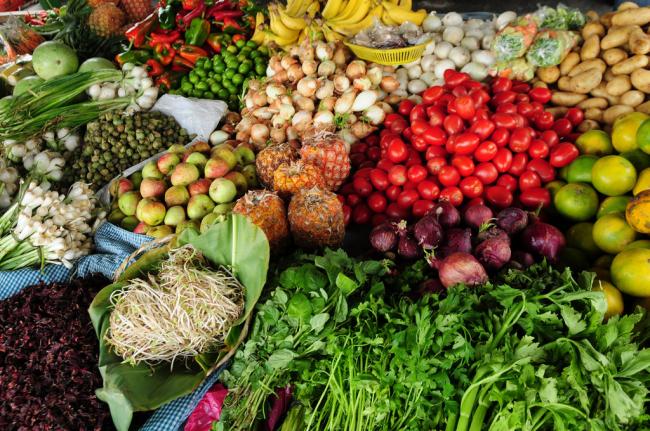
Photo: World Bank/Maria Fleischmann
Support Our Journalism
We cannot do without you.. your contribution supports unbiased journalism
IBNS is not driven by any ism- not wokeism, not racism, not skewed secularism, not hyper right-wing or left liberal ideals, nor by any hardline religious beliefs or hyper nationalism. We want to serve you good old objective news, as they are. We do not judge or preach. We let people decide for themselves. We only try to present factual and well-sourced news.
Support objective journalism for a small contribution.


