Hubble uncovers a mysterious Hermit
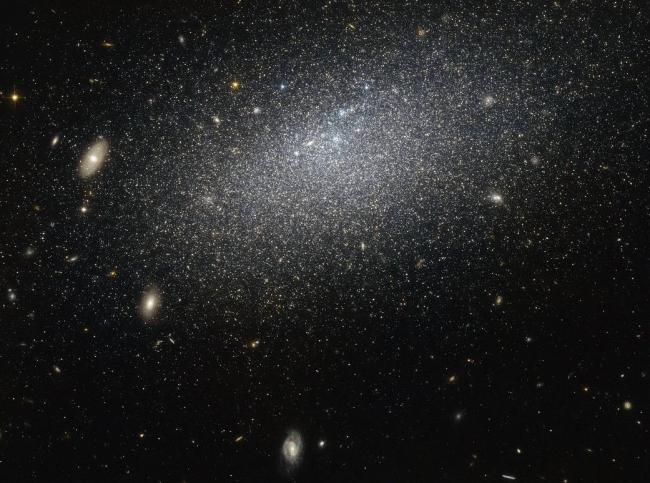
This galaxy is also very isolated. There are about 2.3 million light years between UGC 4879 and its closest neighbor, Leo A, which is about the same distance as that between the Andromeda Galaxy and the Milky Way, read the NASA website.
This galaxy’s isolation means that it has not interacted with any surrounding galaxies, making it an ideal laboratory for studying star formation uncomplicated by interactions with other galaxies. Studies of UGC 4879 have revealed a significant amount of star formation in the first 4 billion years after the Big Bang, followed by a strange 9-billion-year lull in star formation that ended 1 billion years ago by a more recent re-ignition.
The reason for this behavior, however, remains mysterious, and the solitary galaxy continues to provide ample study material for astronomers looking to understand the complex mysteries of star birth throughout the universe.
Image credit: NASA/ESA
Support Our Journalism
We cannot do without you.. your contribution supports unbiased journalism
IBNS is not driven by any ism- not wokeism, not racism, not skewed secularism, not hyper right-wing or left liberal ideals, nor by any hardline religious beliefs or hyper nationalism. We want to serve you good old objective news, as they are. We do not judge or preach. We let people decide for themselves. We only try to present factual and well-sourced news.
Support objective journalism for a small contribution.