October 03, 2026 11:31 pm (IST)

Follow us:


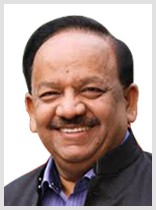
Harsh Vardhan urges medical practitioners to 'work on holiday'
New Delhi, Aug 31 (IBNS): Union Health Minister Harsh Vardhan has appealed to the faculty of medical colleges to include simulation as a training method, besides urging medical practitioners to work on holiday.
Its effectiveness as a bridge between ‘didactic’ medical teaching through lectures, tutorials, laboratory work and problem-based learning is being increasingly acknowledged the world over.
“We don’t want an outdated medical curriculum framework. Our doctors have been world beaters throughout the 20th century. To keep our place there, our medical education planners should change with the times,” the Minister said while inaugurating the 5th Annual Conference of the Society of Cardiac-Anaesthesiology on Sunday.
While admitting that setting up ‘adult’ simulation equipment – paediatric ones are still under development – may be expensive and only affordable for very few institutions, there exist low-cost options like simulation mannequins. The government could step in with assistance schemes in a phased manner, he stated.
Felicitating the cardio-anaesthesiologist community for opening up the prospects by launching the “World Simulation Society”, Harsh Vardhan observed that hospital patients are increasingly articulating the fear that student and resident doctors may be “practicing” on them.
On the other hand, students feel that they are inadequately trained in history training, physical examination, diagnosis and management, he added.
“Medical simulation could be the answer to this crucial gap. It has been proved to enhance knowledge, comfort in procedures and for teaching through teamwork and communication. Many studies have demonstrated the effectiveness of simulation in the teaching of basic science and clinical knowledge, procedural skills, teamwork, communications and assessment of undergraduate and post-graduate medical educational levels,” the Minister added.
The acute shortage of professional anaesthetists in the country also figured in the Minister’s address.
He observed that in the rural areas this is resulting in higher infant and maternal mortality. Lacking trained anaesthetists, carrying out Caesarean births is rendered impossible, he said.
He wanted the medical community to seriously contemplate out-of-the-box solutions. “We need uncommon solutions to our huge health sector issues.”
In this context he mentioned the problem of the hilly states of India where the state governments are finding it difficult to provide secondary and tertiary care. A possible solution could be a ‘work on holiday’ package for specialist doctors.
Harsh Vardhan said that during his recent visit to Mussoorie he had confronted the critical lapses in the public health system of hilly terrains. Though Mussoorie is one of the top tourist destinations of northern India, its local population has only two small government hospitals with very few trained doctors. The total absence of specialists is leading to many preventable deaths, the Minister said.
“The mismatch between the natural beauty of the region stretching from Dehradun to the Jaunsaar-Bawar tribal belt, and, the ugly reality of people dying for want of even the basic primary care is a problem we must address with an out-of-the-box approach,” he remarked.
The Minister exhorted specialist doctors to visit hill stations as guests of the state government. While resting, they could deliver their professional services as cardiologists, gynaecologists, neurologists, anaesthetists, etc. while simultaneously enjoying the state government’s hospitality with their families. This should be considered by them as an extension of their service.
The Minister said that he would circulate this suggestion among the state governments soon. He recognises that a far bigger challenge than opening hospitals is to get people to visit them in their times of need. But if secondary and tertiary care could be taken care of with this novel approach, the governments of the states could concentrate fully on the primary health needs of the people which is the first concern, he said.
The conference was attended by a galaxy of big names from the medical communities of India and abroad.
They included Dr Navin C. Nanda, Distinguished Professor of Medicine and Cardiovascular Disease, UAB School of Medicine of Alabama, USA, Dr Kumar Belani, Professor of Anaesthesiology, University of Minnesota, USA, Dr Bishnu Panigrahi of Fortis Healthcare, Dr H. K. Chopra, president of the Cardiological Society of India, Dr Yatin Mehta, President of the Simulation Society of India, Dr Poonam Malhotra, organising secretary of the conference, and Dr M.C. Mishra, Director of All India Institute of Medical Sciences.
Support Our Journalism
We cannot do without you.. your contribution supports unbiased journalism
IBNS is not driven by any ism- not wokeism, not racism, not skewed secularism, not hyper right-wing or left liberal ideals, nor by any hardline religious beliefs or hyper nationalism. We want to serve you good old objective news, as they are. We do not judge or preach. We let people decide for themselves. We only try to present factual and well-sourced news.
Support objective journalism for a small contribution.
Latest Headlines
From physiotherapy to AI, robotics: MRCCon 2026 highlights how medical rehabilitation has transformed in 27 years
Fri, Oct 02 2026
Study finds chewing tobacco linked to 2.5 lakh deaths worldwide; India among worst-affected countries
Fri, Oct 02 2026
Kolkata's Desun Hospital's Cardio Care Walkathon daws 200 participants on World Heart Day
Fri, Oct 02 2026
Insomnia is more than just sleepless nights: Study finds higher stroke, dementia risk
Tue, Sep 29 2026
Manipal Hospital Dhakuria hosts ‘Heart of Innovation Cardiac Summit’ ahead of World Heart Day
Mon, Sep 28 2026
Eating with your partner could lower blood sugar spikes, study finds
Sun, Sep 27 2026
The 10-hour weight-loss rule: What Johns Hopkins researchers discovered will leave obese, prediabetic patients happy?
Sun, Sep 27 2026
Loneliness could cost you nearly 6 healthy years, major study finds
Sun, Sep 27 2026
Common Add-ons That Improve Parents' Health Insurance Plans
Fri, Sep 25 2026