


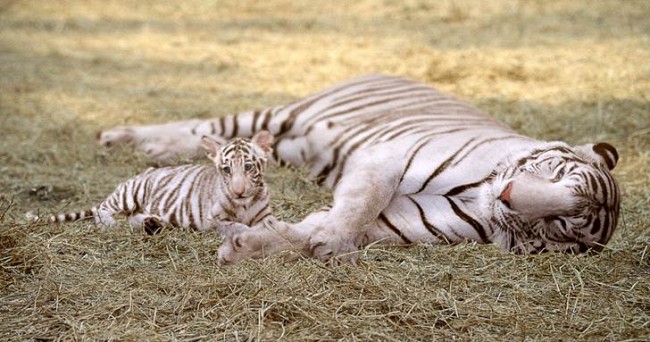
Global wild Tiger population increases: WWF
This updated minimum figure, compiled from IUCN data and the latest national tiger surveys, indicates an increase on the 2010 estimate of ‘as few as 3,200’, and can be attributed to multiple factors including increases in tiger populations in India, Russia, Nepal and Bhutan, improved surveys and enhanced protection.
“For the first time after decades of constant decline, tiger numbers are on the rise. This offers us great hope and shows that we can save species and their habitats when governments, local communities and conservationists work together,” said Marco Lambertini, Director General of WWF International.
The meeting of tiger range governments at the 3rd Asia Ministerial Conference on Tiger Conservation this week is the latest step in the Global Tiger Initiative process that began with the 2010 Tiger Summit in Russia. Governments at that meeting agreed to the Tx2 goal to double wild tiger numbers by 2022.
“This is a critical meeting taking place at the halfway point in the Tx2 goal,” said Dr Rajesh Gopal, Secretary General, Global Tiger Forum. “Tiger governments will decide the next steps towards achieving this goal and ensuring wild tigers have a place in Asia’s future.”
Over the three day meeting, countries will report on their progress toward the Tx2 goal and commit to next steps. Prime Minister Modi will address the conference on the essential role tigers play as a symbol of a country’s ecological well-being.
“A strong action plan for the next six years is vital,” said Michael Baltzer, Leader of WWF Tx2 Tiger Initiative. “The global decline has been halted but there is still no safe place for tigers. Southeast Asia, in particular, is at imminent risk of losing its tigers if these governments do not take action immediately.”
Tigers are classified as endangered by the IUCN Red List of Threatened Species, threatened by poaching and habitat loss. Statistics from TRAFFIC, the wildlife trade monitoring network, show that a minimum of 1,590 tigers were seized by law enforcement officials between January 2000 and April 2014, feeding a multi-billion dollar illegal wildlife trade.
In order for countries to protect their tigers, it is essential that they know their tiger populations and the threats they face.
In 2014, tiger range governments agreed to announce a new global tiger estimate by 2016, based on full, systematic national surveys. However, not all countries have completed or published these surveys. The new minimum estimate of close to 3,900 tigers is based on the IUCN Red List of Threatened Species account for tigers, updated for countries where national tiger surveys have taken place since the IUCN assessment.
WWF and the GTF commend the tiger range countries that have updated their population figures since 2010 and encourage the remaining countries to complete and publish their population surveys as soon as possible.
Support Our Journalism
We cannot do without you.. your contribution supports unbiased journalism
IBNS is not driven by any ism- not wokeism, not racism, not skewed secularism, not hyper right-wing or left liberal ideals, nor by any hardline religious beliefs or hyper nationalism. We want to serve you good old objective news, as they are. We do not judge or preach. We let people decide for themselves. We only try to present factual and well-sourced news.
Support objective journalism for a small contribution.


