El Nino passed peak, but UN weather agency warns 'not to lower guard' as impacts continue
The El Niño is expected to weaken in the coming months and fade away during the second quarter of 2016, according to the latest update from the World Meteorological Organization.
“In meteorological terms, this El Niño is now in decline, but we cannot lower our guard as it is still quite strong and in humanitarian and economic terms, its impacts will continue for many months to come,” said WMO Secretary General Petteri Taalas.
“We have just witnessed one of the most powerful ever El Niño events which caused extreme weather in countries on all continents and helped fuel record global heat in 2015,” Taalas said, highlighting the droughts and excess rainfall it has caused in different parts of the world.
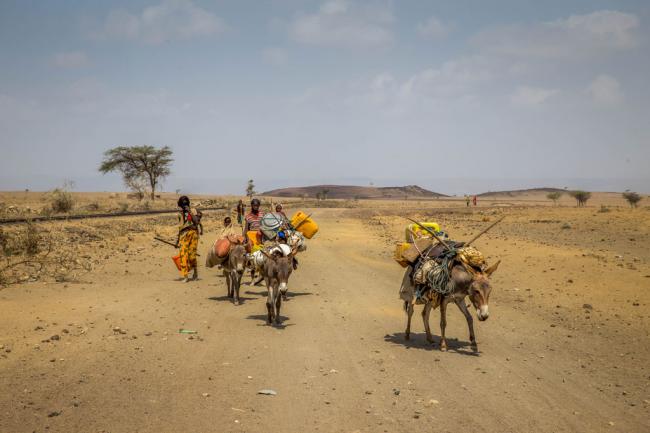
Parts of South America and East Africa are still recovering from torrential rains and flooding. The economic and human toll from drought is becoming increasingly apparent in southern and the Horn of Africa, Central America and a number of other regions, he said.
Eastern and central tropical Pacific Ocean surface temperatures were more than 2 degrees Celsius above average in late 2015, providing evidence that the 2015-16 El Niño was comparable with the devastating 1997-98 and 1982-83 events. However, “it is too early to establish conclusively whether it was the strongest,” he said.
The world is better prepared for this event than ever before, and scientific research conducted during this event will enhance understanding of El Niño and the inter-linkages between this phenomenon and human-induced climate change, he said.
The El Niño-Southern Oscillation (ENSO) phenomenon is the result of the interaction between the ocean and atmosphere in the east-central Equatorial Pacific. It has an irregular recurrence period of between two and seven years. Typically, El Niño peaks late in the calendar year, hence its name (Spanish for Christ Child).
Photo: UNICEF/Mulugeta Ayene
Support Our Journalism
We cannot do without you.. your contribution supports unbiased journalism
IBNS is not driven by any ism- not wokeism, not racism, not skewed secularism, not hyper right-wing or left liberal ideals, nor by any hardline religious beliefs or hyper nationalism. We want to serve you good old objective news, as they are. We do not judge or preach. We let people decide for themselves. We only try to present factual and well-sourced news.
Support objective journalism for a small contribution.