


 DR Congo
Eastern DR Congo: Health system at breaking point warns WHO
New York: Increased violence, natural disasters and disease outbreaks have fueled a deteriorating health situation in the eastern part of the Democratic Republic of Congo (DRC) a senior official with the World Health Organization warned on Friday.
Speaking from Kinshasa, Dr. Jorge Castilla, WHO’s Senior Emergency Officer, told journalists at the regular briefing in Geneva there had been a major increase in displacement due to ongoing violence fuelled by armed groups, leaving around 7.4 million in need of health assistance.
Disease and displacement
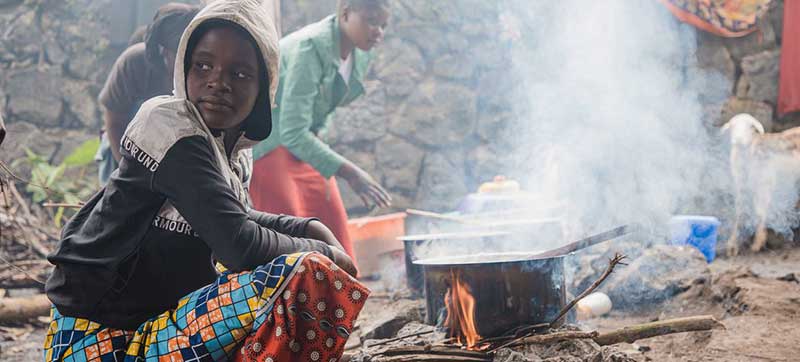
Since March 2022, almost three million people have been forced from their homes in the eastern part of the country, in North Kivu, South Kivu and Ituri provinces.
Dr. Castilla said many on the move had been repeatedly attacked. In the Goma area, “when they move, also diseases move with them. Cholera has spread through the area, and it is now prevalent with 25,000 cases. The area where they arrived has the highest number.”
The country’s health system is under huge pressure due to overlapping outbreaks of COVID-19, measles, polio, mpox. Yellow fever, cholera and malaria are on the rise due to recurrent natural disasters and lack of access to safe water and sanitation for those on the move, said WHO.
Cholera persists
Agency data shows that since mid-March, the DRC has been experiencing an average of 1,000 cholera cases per week. As of 12 June, a total of 24,562 cases and 156 deaths have been reported.
A measles vaccination campaign is planned for the coming days said WHO. The two provinces of North Kivu and South Kivu alone account for 82 per cent of the more than 136,000 measles cases recorded this year so far, which include 2,000 deaths.
In addition to the rampant insecurity, flooding earlier this year killed and injured hundreds of people and affected 36 health facilities in North Kivu, South Kivu, Kasai and Tshopo provinces, further increasing health needs.
Attacks by armed groups on health facilities have also impacted the ability to provide healthcare.
Health system ‘really under stress’
Thanks to the landslides triggered by the flooding, facilities were destroyed along with the loss of life and injuries, “so the entire health system is really under stress”, said Dr. Castilla.
Hunger and malnutrition are growing, said the WHO expert, forcing some of the displaced to return to areas of origin sporadically just to survive and exposing them to further violence, mental health shocks and psychosocial strain.
“There is this increase in malnutrition and this increasing gap between the needs and the assistance,” noted Dr. Castilla. “The whole UN humanitarian system decided on the 16th of this month to do a three-month scale-up for everybody in order to improve the actions of the different partners there.”
Highest in the world
Close to 26 million people are facing acute food insecurity this year, he added, the highest number of food insecure anywhere in the world.
Acute malnutrition is severely affecting children under the age of five, pregnant women and lactating mothers.
Of the $174 million required to provide urgent health assistance, only $23 million (13 per cent) has been mobilized so far, WHO said.
Support Our Journalism
We cannot do without you.. your contribution supports unbiased journalism
IBNS is not driven by any ism- not wokeism, not racism, not skewed secularism, not hyper right-wing or left liberal ideals, nor by any hardline religious beliefs or hyper nationalism. We want to serve you good old objective news, as they are. We do not judge or preach. We let people decide for themselves. We only try to present factual and well-sourced news.
Support objective journalism for a small contribution.


