Early action key to preventing crises related to El Niño and La Niña – UN relief official
New York, Jan 3 (JEN): La Niña is expected to impact weather around the world in 2018, a United Nations relief official said, urging governments and the international community to act early to mitigate the impacts from this potentially destructive weather pattern and its counterpart, El Niño.
“We know that the earlier we’re able to put in place a response, the more efficient and effective that response can be,” Greg Puley, Chief of Policy Advice and Planning Section, UN Office for the Coordination of Humanitarian Affairs (OCHA), told UN News.
El Niño is the term used to describe the warming of the central to eastern tropical Pacific that occurs, on average, every three to seven years. It raises sea surface temperatures and impacts weather systems around the globe so that some places receive more rain while others receive none at all, often in a reversal of their usual weather pattern.
Its counterpart La Niña is associated with cooler-than-average sea surface temperatures, but it also results in extreme weather.
In 2016, 23 countries – representing 60 million people – had to appeal for emergency aid because of El Niño-related weather events.
While there is never 100 per cent certainty that a weather event will happen, Puley urged governments “to be willing to act on the clues.”
He discussed insurance, or forecast-based funding, which released funding early, as innovations that have “no regrets” even if a predicted event does not happen.
“If you’re aware that excess precipitation is forecast, for example, you can make some investment to reinforce river beds so that the excess precipitation doesn’t result in flooding,” he said. “It will cost you $10 million to reinforce the river bed. It might have cost you $50 or $60 million to provide food, water and shelter to people who are displaced by the flood. You can make those investments when you know.”
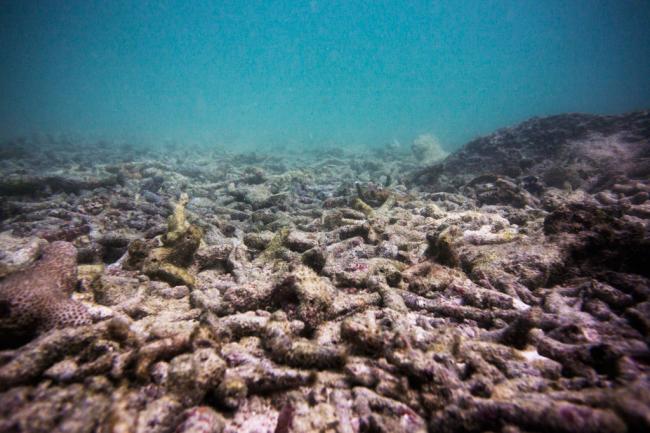
Photo: Kadir van Lohuizen/NOOR
Support Our Journalism
We cannot do without you.. your contribution supports unbiased journalism
IBNS is not driven by any ism- not wokeism, not racism, not skewed secularism, not hyper right-wing or left liberal ideals, nor by any hardline religious beliefs or hyper nationalism. We want to serve you good old objective news, as they are. We do not judge or preach. We let people decide for themselves. We only try to present factual and well-sourced news.
Support objective journalism for a small contribution.