


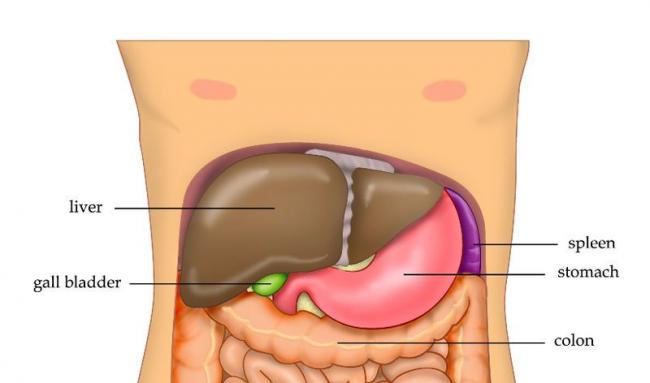
Digital liver scanning technology could halve number of liver biopsies
London, Feb 14 (IBNS): A study jointly led by the University of Birmingham and University of Edinburgh has revealed that a new scanning technology could almost halve the number of liver biopsies carried out on people with fatty liver disease.
The authors of the study, also carried out in collaboration with the Universities of Liverpool and Oxford, concluded that 458 out of every 1,000 liver biopsies could be avoided if people are first assessed using scanning technology.
The study, published in Alimentary Pharmacology & Therapeutics, provides evidence that using the non-invasive technology as a first-line test can rule out the need for further liver tests, and could stop patients having unnecessary biopsies. The researchers calculated it could potentially save the NHS around £150,000 per 1,000 patients.
Liver biopsy is the current gold standard for assessing liver disease, however a global rising prevalence of non-alcoholic fatty liver disease (NAFLD) means there is a need to develop fast, non-invasive and cost-effective ways for assessment and diagnoses.
In this study, 50 patients and six healthy volunteers at Queen Elizabeth Hospital in Birmingham and Royal Infirmary of Edinburgh underwent digital image scanning, and the results were processed by clinical and imaging specialists. A summary of three biochemical characteristics of the liver as well as the images were then used as a new way of helping doctors to diagnose fatty liver disease.
Professor Philip Newsome, Director of the University of Birmingham’s Centre for Liver Research, said: “Non-alcoholic fatty liver disease is on the increase – the prevalence is estimated at around 20-30% in the UK.
“As numbers are expected to grow, this will undoubtedly have a major impact on the nation’s health, and will place a significant demand on NHS resources.
“The rising burden of non-alcoholic fatty liver disease calls for simpler and low risk strategies to manage this clinical problem that meet the needs of both clinicians and patients.”
Professor Gideon Hirschfield, also of the University of Birmingham, said: “It is clear that there is a rising burden of liver disease, particularly from non-alcoholic fatty liver disease. Our study is of importance to evaluating the best pathways to offer patients who need evaluation of their liver health.
“Whilst liver biopsy remains an important part of advanced Hepatology practice, clearly we need better non-invasive tools at our disposal to evaluate the nature and severity of liver disease.
“In this work we were able to compare and contrast different approaches to this challenging problem and show where scanning technology could help contribute to optimised diagnostic, prognostic and treatment pathways.”
The new scanning technology used in this research was called LiverMultiScan™ and was developed by Perspectum Diagnostics.
CEO of Perspectum Diagnostics Dr Rajarshi Banerjee said: “A LiverMultiScan can help a patient see liver disease and act on it. Digital health will improve the way we practice medicine; in this case, a painless scan is clearly safer than a biopsy needle, and is far better suited to monitoring patients.
“We are proud to be leading the way in providing more patient-centric solutions for people with liver disease that helps them and their doctors make informed decisions about their care.”
LiverMultiScan can be used to help doctors diagnose liver disease, even at the early stages, and can also help to predict those people whose liver disease is going to progress more quickly. In this study LiverMultiScan was superior for grading disease severity and excluding people at increased risk of disease progression, compared to the other tests evaluated. In practice this means that management of patients’ liver disease can be optimised, saving on healthcare resources and minimising risk to the patient.
Image: wikimedia Commons
Support Our Journalism
We cannot do without you.. your contribution supports unbiased journalism
IBNS is not driven by any ism- not wokeism, not racism, not skewed secularism, not hyper right-wing or left liberal ideals, nor by any hardline religious beliefs or hyper nationalism. We want to serve you good old objective news, as they are. We do not judge or preach. We let people decide for themselves. We only try to present factual and well-sourced news.
Support objective journalism for a small contribution.


