Cutting down on truck pollution alone will not improve Delhi's environment says CSE
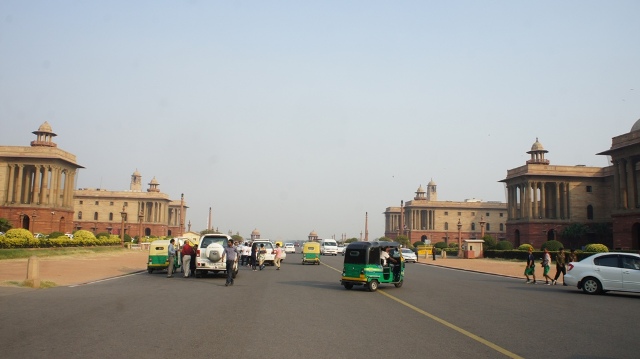
A real time cross-border traffic survey done by CSE has revealed that the number of personal and passenger vehicles that enter Delhi daily -- cars, SUVs, two-wheelers, taxis, buses (excluding trucks and light commercial vehicles) -- are close to the total number of vehicles that get registered in Delhi in a year.
Anumita Roychowdhury, CSE’s executive director-research and advocacy and head of its sustainable urbanisation programme, said, “Delhi’s battle against pollution, congestion and energy guzzling can get increasingly more difficult if its own explosive motorisation gets further aggravated by the huge daily influx of vehicles from outside. An equal numbers of vehicles are going out of Delhi daily contributing to pollution in the NCR towns as well."
According to Roychowdhury, this new analysis reconfirms that ineffective public policy on public transport connectivity is increasing dependence on personal vehicles, leading to enormous pollution and ill-health in Delhi-NCR.
She added, “While so much effort is being made to bypass polluting trucks, both state and central governments are turning the city roads into highways and elevated high speed corridors for personal vehicles from the region. This is undercutting Delhi’s effort to control emissions and exposures in all sectors. These incoming vehicles contribute close to a quarter of the total particulate load from personal and passenger vehicles in the city.”
According to the report, all personal and passenger vehicles from outside Delh0-NCR account for 22 per cent of the total particulate load from the same modes, in and from outside the city. This is not only undercutting pollution control efforts in Delhi but also making enormous demand on land for parking.
Some of the suggestions forwarded by CSE are:
Prioritise scaling up of affordable, comfortable and reliable public transport services and build cycling and walking infrastructure to promote compact city design and reduce dependence on personal vehicles;
Immediately notify Euro VI emissions standards to be implemented by 2020;
Discourage diesel vehicles with strong fiscal and regulatory measures and force all fuels and technologies to get cleaner; and
Implement pollution source-wise action plan in entire Delhi-NCR in a time-bound manner.
Support Our Journalism
We cannot do without you.. your contribution supports unbiased journalism
IBNS is not driven by any ism- not wokeism, not racism, not skewed secularism, not hyper right-wing or left liberal ideals, nor by any hardline religious beliefs or hyper nationalism. We want to serve you good old objective news, as they are. We do not judge or preach. We let people decide for themselves. We only try to present factual and well-sourced news.
Support objective journalism for a small contribution.