


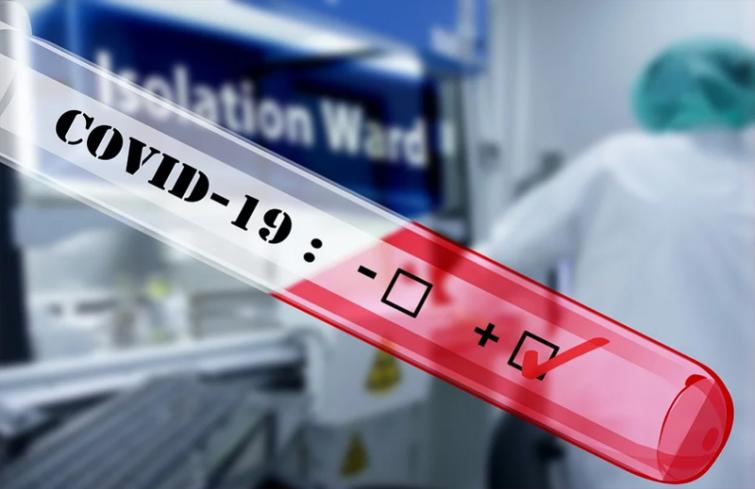
COVID19: WHO calls for stronger whole of society approach in South-East Asia Region
New Delhi/IBNS: Amidst rapid spread of COVID19 and continuing challenges, the World Health Organization today emphasized on a stronger whole of society and whole of government effort in South-East Asia Region to prevent a long-haul with the pandemic and avert further loss of precious human and other resources.
“A more comprehensive approach is needed with communities at the center of our response. Most importantly, communities need to be engaged and empowered to take appropriate decisions and measures. The onus must be on each one. At this stage, everyone needs to contribute to minimize health as well as socio-economic impact of the pandemic,” said Dr Poonam Khetrapal Singh, Regional Director, WHO South-East Asia.
In recent days and weeks, countries in the Region have taken difficult decisions including implementation of unprecedented physical distancing measures to arrest the virus spread.
Nearly 1.5 billion people - in Bangladesh, India, Myanmar, Nepal, Sri Lanka and Thailand together - are currently experiencing lockdowns. Supported by communities, we should start to see impact of these measures in the coming weeks. Simultaneously, this is also an opportunity for countries to enhance capacities of their health systems.
As physical distancing measures take effect and capacities are built, whatever the transmission scenario, with the right approach the virus can be contained. In areas where community transmission occurs, it can be suppressed and controlled, the Regional Director said.
“Every case, cluster and evidence of community transmission would need to be aggressively responded to. Basic public health measures such as active case detection, isolation, testing, treatment and contact tracing are among our most powerful tools. A strong surveillance is needed to assess and guide evidence based measures,” Dr Khetrapal Singh said.
The Regional Director held a virtual meeting with health ministers of the Region to review the challenges. Most countries highlighted the need for essential medical equipment, testing kits, personal protective equipment for health workers and enhancing health systems capacities, specially to respond to community transmission.
The Regional Director said WHO will continue to work with the Pandemic Supply Chain Network to ensure all at-risk and critically affected countries are supported. “These shortages are a global problem, and one that will have a significant impact on the response. If we cannot protect health workers, and are unable to adequately test, we will be fighting with one arm tied,” she said.
The Regional Director commended countries in the Region for participating in the WHO Solidarity Trial. India, Indonesia and Thailand have signed up for the multi-country trial, which will compare the safety and effectiveness of four different drugs or drug combinations against COVID-19.
“It is a historic undertaking that will dramatically reduce the time needed to generate robust evidence about what drugs are effective in treating COVID-19. The more countries that join, the faster we will have the results. I urge all countries to sign up,” Dr Khetrapal Singh said, adding that WHO would soon be launching a second protocol for the Solidarity Trial that will help establish incidence and prevalence of infection and the future behavior of the virus.
Support Our Journalism
We cannot do without you.. your contribution supports unbiased journalism
IBNS is not driven by any ism- not wokeism, not racism, not skewed secularism, not hyper right-wing or left liberal ideals, nor by any hardline religious beliefs or hyper nationalism. We want to serve you good old objective news, as they are. We do not judge or preach. We let people decide for themselves. We only try to present factual and well-sourced news.
Support objective journalism for a small contribution.


