COVID-19 in Africa: WHO urges constant vigilance as cases top 200,000
New York: COVID-19 is accelerating in Africa, with more than 200,000 cases and more than 5,600 deaths, the regional office for the World Health Organization (WHO) reported on Thursday.
Africa recorded its first case of the new disease in mid-February. While it took nearly 100 days to reach 100,000 cases, the jump to 200,000 cases occurred in less than 20.
“For now, Africa still only accounts for a small fraction of cases worldwide”, said Dr Matshidiso Moeti, WHO Regional Director for Africa. “But the pace of the spread is quickening. Swift and early action by African countries has helped to keep numbers low but constant vigilance is needed to stop COVID-19 from overwhelming health facilities.”
South Africa most affected
The rising caseload is being driven by 10 countries, which account for nearly 80 per cent of all cases. Most deaths – more than 70 per cent – are occurring in only five nations: Algeria, Egypt, Nigeria, South Africa and Sudan.
South Africa is the most affected country, with one-quarter of the continent’s total cases. Two provinces - Western Cape and Eastern Cape – are reporting high numbers of cases and deaths daily.
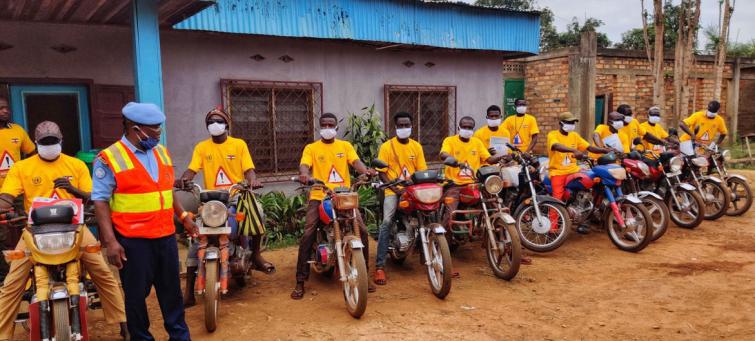
WHO said public health measures have helped to slow the spread of COVID-19 on the continent. Many governments took steps such as implementing lockdowns, promoting physical distancing, and conducting contact tracing.
The UN agency and its partners have also been supporting national efforts to scale up the health workforce and laboratory testing, and to establish screening points at airports and border crossings.
Advice for lifting lockdowns
COVID-19 first emerged in Wuhan, China, at the end of last year. Six months later, there have been nearly 7.3 million cases worldwide, and more than 413,000 deaths, and the disease has disrupted everything from global trade, to education, to transport.
Several countries have begun relaxing lockdowns so that economic and social activities can resume.
“Stay-at-home orders and closing of markets and businesses have taken a heavy toll, particularly on the most vulnerable and marginalized communities”, said Dr Moeti. “So, the need to balance between saving lives and protecting livelihoods is a key consideration in this response, particularly in Africa.”
WHO recommends that as restrictions are lifted, countries must ensure that they can continue to test for COVID-19 while also providing access to essential health services.
Support Our Journalism
We cannot do without you.. your contribution supports unbiased journalism
IBNS is not driven by any ism- not wokeism, not racism, not skewed secularism, not hyper right-wing or left liberal ideals, nor by any hardline religious beliefs or hyper nationalism. We want to serve you good old objective news, as they are. We do not judge or preach. We let people decide for themselves. We only try to present factual and well-sourced news.
Support objective journalism for a small contribution.