 COVID-19
COVID-19: BA.4 and BA.5 variants spur 20 per cent rise in cases
New York: COVID-19 cases are on the rise in some 110 countries, driven by the BA.4 and BA.5 variants, said the UN health agency chief on Wednesday, amounting to a 20 per cent spike overall, and a rise in the number of deaths across three of the six world regions monitored by the World Health Organization.
WHO Director-General Tedros Adhanom Ghebreyesus stressed in his weekly briefing to journalists that the global figure overall remains “relatively stable”, but nobody should be under any illusion, that the coronavirus is on the way out.
“This pandemic is changing but it’s not over. We have made progress but it’s not over.”
Act together
“Only with concerted action by governments, international agencies and the private sector can we solve the converging challenges”, said the WHO chief.
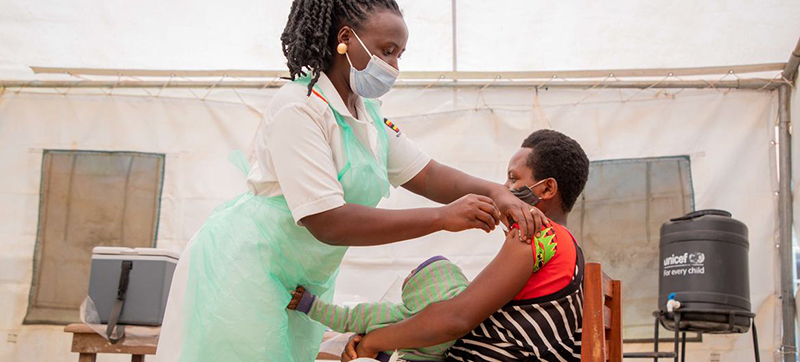
He warned that our ability to track the virus is under threat as reporting and genomic sequences are declining. The optimistic mid-year deadline for all countries to vaccinate at least 70 per cent of their populations is looking unlikely, with the average rate in low-income countries, standing at 13 per cent.
On the bright side, in the past 18 months, more than 12 billion vaccines have been distributed around the world, and 75 percent of the world’s health workers and over-60s are now vaccinated.
20 million lives saved by shots
The influential Lancet medical journal, estimates that 20 million lives have been saved because of vaccines, said Tedros.
Last year, it was the hoarding of vaccines by rich and manufacturing countries which proved to be the major barrier to access, but this year, it’s what he described as the wavering “political commitment to getting vaccines out to people - and challenges of disinformation”, which are thwarting the pace of inoculations at the national level.
He called for all at-risk groups, to be vaccinated and boosted, as soon as possible.
“For the general population, it also makes sense to keep strengthening that wall of immunity, which helps lessen the severity of the disease and lowers the risk of long- or post-COVID condition.”
He said continuing ‘mild’ cases are disruptive and damaging, keeping children out of school and adults from their jobs, “which causes further economic and supply chain disruption.”
He said the goal of 70 per cent coverage was still desirable, based on the principle that if we don’t share vaccines equitably, “then we undercut the philosophy that all lives have equal worth.”
Second generation vaccines
Tedros said that it was critical for funding to be secured for “second generation vaccines”, as well as testing and treatments.
“The ideal solution would be the development of a pan-coronavirus vaccine that covers all the variants so far and potentially future ones”, the WHO chief declared.
“This is feasible, WHO continues to convene scientists and researchers and there has been a lot of research into this virus and understanding immunology overall.”
New global trials
He said through the agency’s Solidarity Trials, global trials of new vaccines could take place to rapidly establish their safety and efficacy.
“Now is the time”, he concluded, for government health departments to integrate tests and anti-virals into clinical care, so that people that are sick can be treated quickly.
“With new variants of concern likely - genomic sequencing remains critical. I also call for accelerated efforts and incentives to be developed around the moonshot of developing a pan-coronavirus vaccine.”
Support Our Journalism
We cannot do without you.. your contribution supports unbiased journalism
IBNS is not driven by any ism- not wokeism, not racism, not skewed secularism, not hyper right-wing or left liberal ideals, nor by any hardline religious beliefs or hyper nationalism. We want to serve you good old objective news, as they are. We do not judge or preach. We let people decide for themselves. We only try to present factual and well-sourced news.
Support objective journalism for a small contribution.