Countries must up their game to reduce low birth weights, warns UN-backed report
New York, May 16 (IBNS): Many countries need to invest more and take greater action to reduce the number of babies born with low birth weights which put their health at risk, urges a United Nations-backed report released on Wednesday.
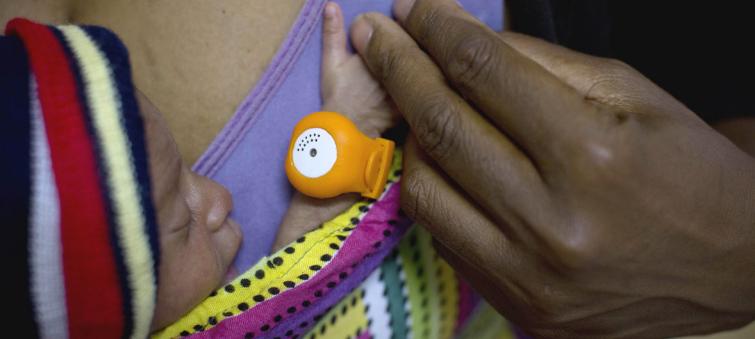
Around one-in-seven babies worldwide weighed less than 5.5 pounds, or 2.5 kilogrammes at birth, according to latest data from 2015.
The Lancet Global Health research paper was developed by experts from the World Health Organization (WHO), UN Children’s Fund (UNICEF) and the London School of Hygiene and Tropical Medicine, which not only reveals that more than 20 million babies that year were born with a low birthweight, but that 80 per cent of the world’s 2.5 million low weight newborns die every year, because they are either pre-term and/or small for gestational age.
We have seen very little change over 15 years – Report author
“We have seen very little change over 15 years”, spelled out lead author Hannah Blencowe, from the London School of Hygiene and Tropical Medicine in the United Kingdom. “Despite clear commitments, our estimates indicate that national Governments are doing too little to reduce low birth weight”.
In 2012, WHO’s 195 member States committed to reduce its prevalence by 30 per cent, by 2025. However, estimates found only a 1.2 per cent decrease worldwide – from 22.9 million low birthweight livebirths in 2000 to 20.5 million in 2015 – indicating that if the rate did not pick up, the world would fall well short of the annual 2.7 per cent reduction required to meet the 2012 target.
Weighing in
Although every newborn must be weighed, co-author UNICEF Statistics and Monitoring Specialist, Julia Krasevec, said that “worldwide, we don’t have a record for the birth weight of nearly one-third of all newborns”.
“We cannot help babies born with low birth weight without improving the coverage and accuracy of the data we collect,” Krasevec added.
Key drivers of low birth weight throughout life include:
Extremes in maternal age.
Multiple pregnancy.
Obstetric complications.
Chronic maternal conditions, such as hypertensive pregnancy disorders.
Infections, such as malaria.
Nutritional status.
Environmental factors, such as indoor air pollution.
Tobacco and drug use.
And low weight babies who survive are at greater risk of stunting, or being short for their ages in height, and suffering developmental and physical ill health later in life - including chronic conditions such as diabetes and cardiovascular disease.
The study’s authors have called for international action to ensure that all babies are weighed at birth, to improve clinical care and to promote public health inquiry into the causes of low birthweight, to reduce death and disability.
“With better weighing devices and stronger data systems, we can capture the true birth weight of every baby, including those born at home, and provide better quality of care to these newborns and their mothers” Krasevec affirmed.
Rich or poor, no region is immune
The publication illustrates that three-quarters of those affected were born in Southern Asia and sub-Saharan Africa.
However, the problem is also significant in high-income countries in Europe, North America, Australia and New Zealand, where there has been virtually no progress in reducing low birthweight rates since 2000.
In low-income countries, poor growth in the womb is a major cause, while the new analysis associates the issue in more developed regions with prematurity, or a baby which is born earlier than 37 weeks.
Because it is “a complex clinical entity”, WHO co-author Mercedes de Onis said that reduction “requires understanding of the underlying causes in a given country”, which “should be a priority” in high-burden countries.
Support Our Journalism
We cannot do without you.. your contribution supports unbiased journalism
IBNS is not driven by any ism- not wokeism, not racism, not skewed secularism, not hyper right-wing or left liberal ideals, nor by any hardline religious beliefs or hyper nationalism. We want to serve you good old objective news, as they are. We do not judge or preach. We let people decide for themselves. We only try to present factual and well-sourced news.
Support objective journalism for a small contribution.