Birmingham and Indian scientists investigate air pollution causes
Dr Francis Pope and Professor Mukesh Khare at the Indian Institute of Technology have co-organized a workshop in Delhi next month (Dec) to investigate air pollution in the two countries.
The event is sponsored by the British Council and follows work at Birmingham which discovered that there is a sharp reduction in visibility caused by fireworks events marking occasions such as Diwali and Guy Fawkes’ night.
Birmingham scientists found that visibility was further decreased when the relative humidity was high.
Dr Pope, from the University’s School of Geography, Earth and Environmental Sciences, said: “Events such as Diwali celebrations and Guy Fawkes’ Night are attended and much enjoyed by many people in India and the UK. Unfortunately, these events can affect short term air quality and lead to significant reductions in visibility.
“We hope that our Delhi workshop will help us to better understand the causes, sources and effects of pollution in India and the UK and how they differ between the two countries. If forecasts suggest that planned displays will coincide with conditions likely to exacerbate poor visibility, then organisers and local authorities should be prepared to issue poor visibility warnings in advance. This precautionary measure could help to prevent unnecessary accidents.”
Dr Pope’s research used data taken over 13 years between 2000 and 2012 from 34 meteorological stations throughout the UK the scientists noted an average 25% reduction in visibility caused by atmospheric particulate matter from fireworks and bonfires.
If the conditions are unfavourable then the visibility reduction can be much more severe; for example, visibility reductions of 64% were seen in Nottingham.
Fireworks celebrations usually involve both bonfires and ground and air detonating fireworks. The particulate matter that is scattered after detonation is hygroscopic – its water content is dependent on the local relative humidity.
As the humidity increases so does the water content of the particulate matter, changing the average size and composition of each particle, which leads to the particle being able to scatter light more effectively and hence reduce visibility.
The effects, which were especially pronounced when humidity was high, raise concerns regarding motorist and pedestrian safety. The visibility reducing effect of the extra particulate matter loading in the atmosphere can last up to two days after the fireworks event.
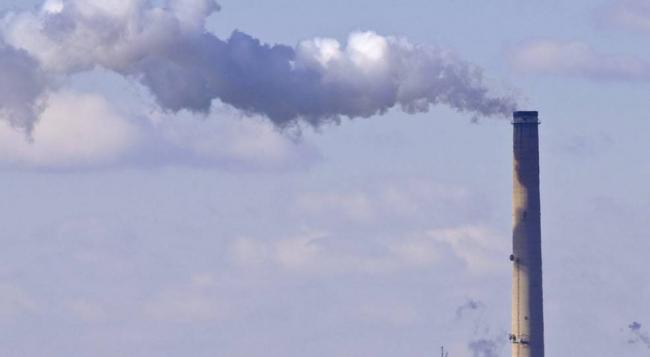
Image credits: EPA
Support Our Journalism
We cannot do without you.. your contribution supports unbiased journalism
IBNS is not driven by any ism- not wokeism, not racism, not skewed secularism, not hyper right-wing or left liberal ideals, nor by any hardline religious beliefs or hyper nationalism. We want to serve you good old objective news, as they are. We do not judge or preach. We let people decide for themselves. We only try to present factual and well-sourced news.
Support objective journalism for a small contribution.