Better science needed to guide policy decisions for sustainable development - UN report
“The successful implementation of the new sustainable development agenda requires a strong scientific foundation that is understood by policymakers,” said Wu Hongbo, UN Under-Secretary-General of Economic and Social Affairs, referring to the proposed 17 sustainable development goals, scheduled for adoption in September in New York.
The 2015 Global Sustainable Development Report, an intergovernmental-mandated report on the science-policy interface for sustainable development, was presented to UN Member States at the High Level Political Forum, the new body that is expected to be tasked with the monitoring the implementation of the new sustainable development agenda.
“This report shows us how we must sharpen our collective scientific understanding and presentation so that we can make informed decisions that improve people’s lives,” stressed Hongbo.
It provides a survey of scientific findings that includes oceans and livelihoods, natural disasters, industrialization, sustainable consumption and production, and use of “big data” in Africa.
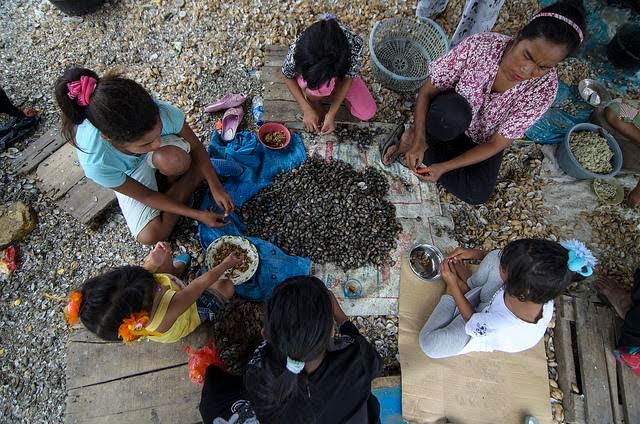
On the state of the science on oceans, seas and marine resources, for example, the report finds that while 3 billion people depend on these resources for their livelihoods, they are increasingly threatened, degraded or destroyed by human activities.
Although there are estimates that the global oceans-based economy is estimated at between 3 and 6 trillion dollars a year, experts say there is a real lack of scientific information on how improvements in human well-being can reduce further ocean degradation.
They suggest that further research needs to be undertaken on the effects of changes in lifestyle, such as reductions in consumptions, on the sustainability of marine resource use.
Effective disaster risk reduction measures will need to play a key role for disaster-prone countries in implementation of the post-2015 development agenda in order to prevent hard won development gains from being eroded. The problem is all too real, since the year 2000, natural disasters have caused the loss of life of over 1.1 million and affected another 2.7 billion people, warns the report.
Using crowd sourcing techniques within the scientific community, the Report attempted to identify new and emerging issues, based on scientific evidence that policymakers need to be aware of. In the present exercise, energy topped the list, followed by natural resource management, governance and climate change.
New ways to get health and livelihood data supports a range of question types, and enables quick analysis and geographical mapping of the data, as the Drought Early Warning Program in southern Ethiopia proves it, adds the report: women use Android smartphones and tablets to collect data on water, health, food security, and livelihoods indicators every month from their communities using an app that captures audio, photos and GPS data.
Cell phone records have also helped to estimate population flows and design targeted policies against Ebola, notes the report. As the virus spread rapidly via local and regional travel, the data collected allowed modelers to assess the likely travel routes of infected individuals, so as to identify where new outbreaks or increased local transmission might occur.
UN Photo/Rick Bajornas
Support Our Journalism
We cannot do without you.. your contribution supports unbiased journalism
IBNS is not driven by any ism- not wokeism, not racism, not skewed secularism, not hyper right-wing or left liberal ideals, nor by any hardline religious beliefs or hyper nationalism. We want to serve you good old objective news, as they are. We do not judge or preach. We let people decide for themselves. We only try to present factual and well-sourced news.
Support objective journalism for a small contribution.