 Asteroid
Asteroid 2011 ES4 to make closest approach to Earth on Sept 1
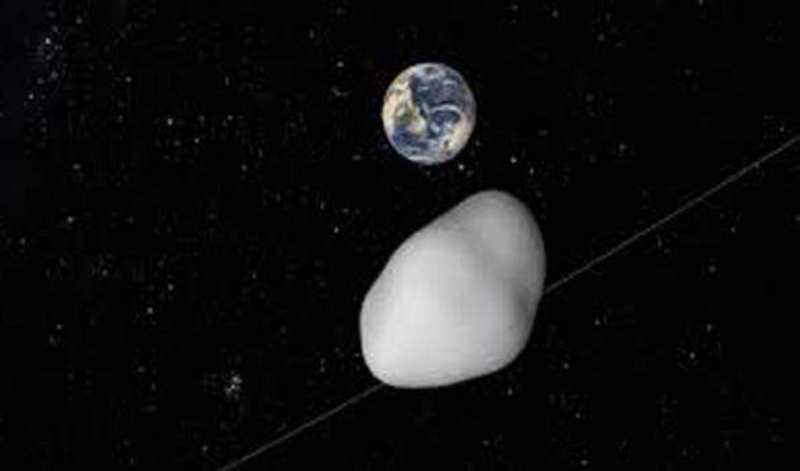
Hyderabad/UNI: Asteroid 2011 ES4 will make the closest approach to the Earth and will be closer to our planet than the moon on September 1.
2011 ES4 (also known as 2011 ES4) is an Apollo near-Earth asteroid roughly 25 meters (82 feet) in diameter. It was discovered on 2 March 2011.
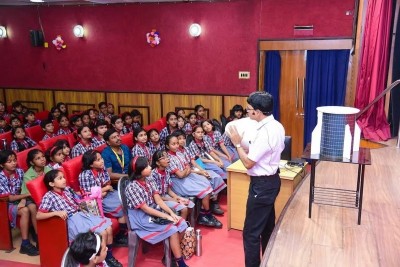
In a statement here on Sunday, BM Birla Science Centre Director Dr B G Sidharth said, on September 1, asteroid 2011 ES4 will make a close approach towards the Earth and will be closer to our planet than the Moon.
It is the size of several football fields which was discovered in 2011. It is coming within 120,000 kilometres of the Earth which is lesser than the distance to the Moon. It is reported that the dimensions of the celestial body are from 22 to 49 meters. However, we do not expect it to collide and cause any damage.
The last time such a thing happened was in 1908 when it was believed that a bit of a Comet Encke struck a place called Tunguska in Siberia.
There was heavy damage to trees and so on. But no casualties as it was a deserted place, the statement added.
Support Our Journalism
We cannot do without you.. your contribution supports unbiased journalism
IBNS is not driven by any ism- not wokeism, not racism, not skewed secularism, not hyper right-wing or left liberal ideals, nor by any hardline religious beliefs or hyper nationalism. We want to serve you good old objective news, as they are. We do not judge or preach. We let people decide for themselves. We only try to present factual and well-sourced news.
Support objective journalism for a small contribution.