Trump signals 25% tariffs on auto, semiconductor, and drug imports by April: Report
Washington DC: President Donald Trump indicated he is likely to impose tariffs of around 25% on automobile, semiconductor, and pharmaceutical imports, with an announcement expected as early as April 2, Bloomberg reported.
If implemented, these measures would escalate the president’s ongoing trade war.
While Trump had previously announced 25% tariffs on steel and aluminium—set to take effect in March—his latest comments offer the most detailed insight into additional sectors that may face new trade barriers.
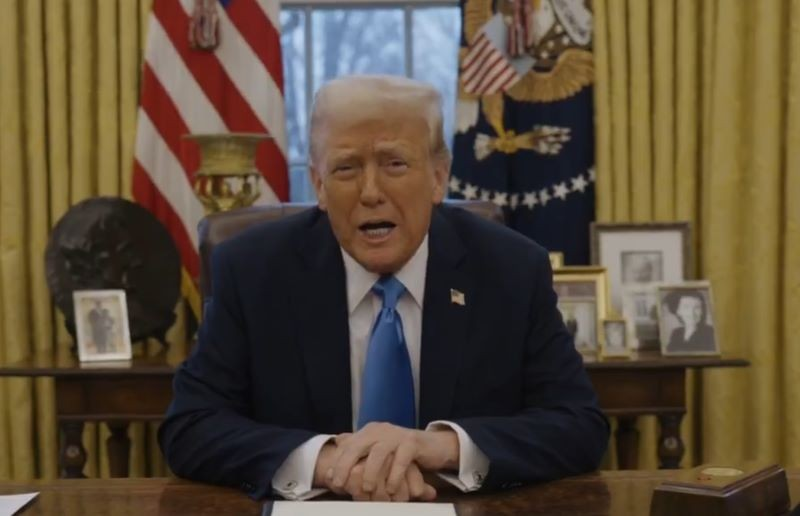
“I probably will tell you that on April 2, but it’ll be in the neighborhood of 25 per cent,” Trump told reporters at his Mar-a-Lago club when asked about his plan for auto tariffs.
When questioned about potential levies on semiconductor chips and pharmaceutical drugs, Trump responded, “It’ll be 25 per cent and higher, and it’ll go very substantially higher over a course of a year.” He added that he intends to provide companies some time to adjust before implementing the new import taxes.
“When they come into the United States and they have their plant or factory here there is no tariff, so we want to give them a little bit of a chance,” he said.
A tariff hike on automobile imports would have wide-reaching consequences for the industry.
Last year, nearly 8 million passenger cars and light trucks were imported into the US, accounting for about half of all vehicle sales.
European automakers like Volkswagen AG and Asian manufacturers such as Hyundai Motor Co. are among those expected to be significantly affected, given the volume of their US sales reliant on imports.
Trump did not specify whether the tariffs would apply universally to all imported vehicles or be targeted at specific countries.
It also remains uncertain whether cars manufactured under free trade agreements with Canada and Mexico would be exempt from any new industry-specific duties.
The American Automotive Policy Council, representing Detroit’s automakers, has argued that vehicles produced in North America under the agreement should not be subject to additional levies.
Industry analysts, lobbyists, and executives have cautioned that steep new tariffs on automobiles could have broad economic repercussions, leading to higher consumer prices and increased costs across the sector.
Several countries have vowed to retaliate swiftly if Trump’s tariffs take effect, with plans to target politically sensitive goods produced in Republican-led states.
The European Union’s top trade official is visiting Washington this week in a final attempt to negotiate an exemption before the April deadline.
However, Trump has suggested that individual countries will have little room to negotiate their way out of the tariffs if he perceives their trade relationship with the US as unfair.
Beyond these proposed tariffs, Trump has threatened further duties in a broader effort to realign US trade relationships.
He has long accused other nations of exploiting the US economy and views import tariffs as a means of restoring domestic industries and boosting government revenue.
Many economists, however, warn that such measures would raise consumer prices and hinder efforts to combat inflation.
Trump has stated that he plans to implement "reciprocal" tariffs on a country-by-country basis starting in April, though specific details remain unclear.
Some of the US’s largest trading partners, including China, Canada, and Mexico, could be subject to multiple layers of tariffs.
For instance, a 10% tariff has already been placed on China, while proposed 25% tariffs on Canada and Mexico have been deferred until at least March 4.
These levies could be cumulative, meaning that producers in Canada and Mexico may ultimately face multiple duties in certain sectors.
If enacted, Trump's trade policies would significantly reshape global supply chains and trade dynamics, with ripple effects on US pricing.
While tariffs are paid by importers and often passed on to consumers, they can sometimes be offset by price adjustments in foreign markets.
Support Our Journalism
We cannot do without you.. your contribution supports unbiased journalism
IBNS is not driven by any ism- not wokeism, not racism, not skewed secularism, not hyper right-wing or left liberal ideals, nor by any hardline religious beliefs or hyper nationalism. We want to serve you good old objective news, as they are. We do not judge or preach. We let people decide for themselves. We only try to present factual and well-sourced news.
Support objective journalism for a small contribution.