 UPI
UPI
‘Just tax collection’: Ashneer Grover slams new UPI charges above Rs 2,000
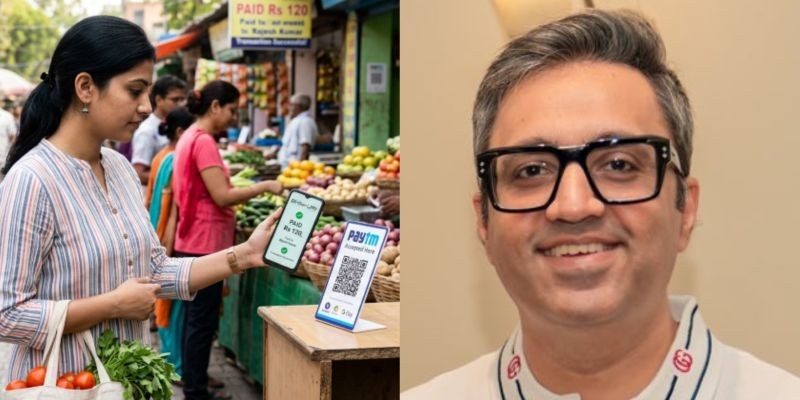
Mumbai/IBNS: Entrepreneur Ashneer Grover has criticised the Centre's new Merchant Discount Rate (MDR) framework for specified UPI merchant transactions above Rs 2,000, arguing that the cost of processing a UPI payment remains the same regardless of the transaction amount.
In an interview with Times Now, the former BharatPe co-founder questioned the logic behind imposing MDR on certain merchant payments while keeping person-to-person (P2P) UPI transactions free.
What Ashneer Grover said
Grover argued that the underlying cost of operating the UPI infrastructure does not change significantly based on whether a payment is a small QR transaction or a larger transfer.
“If I transfer ₹1 lakh to my friend through UPI, or I pay ₹3,000 using a QR code, what is the cost of running the system? The cost is the same. So, if I transfer ₹1 lakh to my friend, nobody is making money from it. But if I make a payment of ₹2,500 to a small shopkeeper then the government wants to put charges, what’s the logic?”
He also cited the National Payments Corporation of India's (NPCI) financial position and banks' earnings while comparing them with the costs associated with cash and ATM infrastructure.
Grover subsequently wrote on X, "Any levy on UPI is just tax collection. UPI is the one scientific achievement of India everyone acknowledges par ab tax ki bali chadhegi."
India mein koi 5 minutes number Google kar le to doodh ka doodh paani ka paani ho jaye.
— Ashneer Grover (@Ashneer_Grover) September 15, 2026
RBI surplus to Govt : ₹2.87 Lakh Crores (US$30 Bn)
Total listed bank profits : ₹4.11 Lakh Crores (US$42 Bn)
NPCI - which runs UPI pre tax ‘surplus’ : ₹ 1,888 crores (US$200 Mn)
To… https://t.co/jI1nHP0qVs
What is the new UPI controversy?
The Centre has introduced a framework under which a 0.4% MDR will apply to specified person-to-merchant (P2M) UPI transactions above Rs 2,000, with the MDR capped at Rs 300 for transactions of Rs 75,000 and above.
However, the government has stressed that this is not a charge imposed directly on customers.
According to the Ministry of Finance, all P2P UPI transactions will remain completely free, irrespective of the amount. Merchant payments up to Rs 2,000 will also remain free, while small merchants receiving up to Rs 1 lakh per month through UPI QR codes under the specified P2PM category will continue to enjoy zero MDR.
The government said around 96% of P2M transactions will remain unaffected and that MDR will apply to only about 4% of merchant transactions. It has also clarified that MDR is neither a tax nor a charge collected by the government or NPCI; instead, it is distributed among participants in the payment ecosystem, including banks and payment service providers.
Government says customers will not pay MDR
The Centre has maintained that customers will not be required to pay the MDR when making UPI payments.
Banks have been advised to ensure that merchants do not pass the MDR on to customers, while UPI app providers have been prohibited from imposing platform fees or hidden charges, according to the government's latest clarification.
The government has said the framework is aimed at ensuring the long-term sustainability of the UPI ecosystem, with revenue from larger merchant transactions supporting banks, payment service providers and UPI application providers in maintaining and expanding payment infrastructure.
Why the Rs 2,000 threshold has triggered debate
The controversy centres on the distinction between who pays MDR and who ultimately bears the cost.
While the government's framework places MDR within the merchant-payment ecosystem and says customers cannot be charged directly, critics such as Grover have questioned whether merchants could eventually factor the cost into prices.
The Centre, meanwhile, has maintained that UPI will remain free for individuals and that the framework is designed to protect small merchants while creating a revenue model for the continued expansion of the digital payments ecosystem.
Support Our Journalism
We cannot do without you.. your contribution supports unbiased journalism
IBNS is not driven by any ism- not wokeism, not racism, not skewed secularism, not hyper right-wing or left liberal ideals, nor by any hardline religious beliefs or hyper nationalism. We want to serve you good old objective news, as they are. We do not judge or preach. We let people decide for themselves. We only try to present factual and well-sourced news.
Support objective journalism for a small contribution.